
Employee Disengagement: Crafting Engagement Through Empowerment + 13 New Way!


In the dynamic world of organizations, the intricate relationship between control and disengagement weaves a tapestry of influences that shape employee experiences and outcomes.
Delving into this interplay reveals a myriad of insights into how organizational structures, management approaches, and individual empowerment collectively impact engagement levels. Join us as we embark on a journey to unravel the intricacies of control and disengagement within the organizational landscape.
The relationship between control and disengagement in the context of organizations is a complex and multifaceted topic. If you’ve ever wondered how control dynamics can either stifle or foster engagement among employees, this exploration promises to shed light on this critical aspect of workplace dynamics.
By understanding the nuanced connections between these concepts, you’ll gain insights that can empower you to create a more motivated, empowered, and committed workforce.
In this blog post, we’ll dive into the heart of the matter. We’ll dissect the meanings and implications of disengagement and control within organizations. We’ll explore how disengagement manifests, the role control plays in shaping engagement, and how these concepts intersect in the workplace.
Moreover, we’ll delve into contemporary trends, such as remote work, and analyze how they influence the balance between control and disengagement. As we navigate this landscape, we’ll uncover strategies that organizations can employ to foster engagement while relinquishing some degree of control.
So:
If you’re ready to uncover the secrets behind the intricate dance of control and disengagement in organizations, read on. Discover how autonomy, empowerment, and a well-crafted organizational culture can lead to a more engaged and motivated workforce.
Content Overview:
Disengagement in Organizations
Disengagement in an organizational context refers to a state where employees are emotionally disconnected from their work, lack enthusiasm, and have a reduced commitment to their roles and the organization. Disengaged employees may show decreased productivity, absenteeism, and a lack of initiative. Factors contributing to disengagement can include feelings of being undervalued, job dissatisfaction, and lack of opportunities for growth.
Control in Organizations
Control within organizations refers to the extent to which employees are allowed to influence or make decisions related to their work. It can encompass various aspects, such as decision-making authority, autonomy, and empowerment. When employees feel they have a certain level of control over their tasks, work processes, and decisions, they are more likely to feel motivated and engaged.
Types of Disengagement
Employee disengagement can manifest in different ways, and understanding these types can help you address the root causes more effectively. Here are the main types of disengagement you might encounter:
1. Actively Disengaged
These employees are not just unhappy at work; they might also be vocal about their dissatisfaction and could even undermine the efforts of their engaged colleagues. Their negativity can spread, affecting the morale of the entire team.
2. Passively Disengaged
Passively disengaged employees are mentally checked out but don’t necessarily show overt signs of discontent. They do the bare minimum, avoid taking initiative, and aren’t interested in contributing to the company’s goals. They’re essentially coasting through their job without much enthusiasm.
3. Situationally Disengaged
These employees might be engaged at times but can become disengaged due to specific circumstances, such as a particular project they don’t enjoy, temporary personal issues, or conflicts with a coworker. Their engagement levels fluctuate based on these situations.
4. Strategically Disengaged
Sometimes, employees become disengaged because they feel misaligned with the company’s direction or strategies. They might disagree with leadership decisions or feel that the company’s goals don’t match their values or career aspirations.
5. Burnout-Induced Disengagement
Employees who are overworked and stressed can become disengaged due to burnout. They might have been highly engaged initially but have lost their motivation and energy because of prolonged stress and lack of work-life balance.
6. Culturally Disengaged
When employees feel they don’t fit in with the company culture, they might become disengaged. This can happen if they feel excluded, or unappreciated, or if the company’s values don’t align with their own.
7. Boredom-Induced Disengagement
Employees who find their work monotonous or unchallenging can become disengaged out of sheer boredom. They need more stimulating tasks or opportunities for growth to stay engaged.
8. Career Stagnation
Employees who feel stuck in their roles with no clear path to advancement can become disengaged. They might feel there’s no future for them in the company, leading to a lack of motivation.
9. New Hire Disengagement
Sometimes new employees can become disengaged if they don’t receive proper onboarding or if the reality of the job doesn’t match their expectations. This early disengagement can lead to high turnover if not addressed promptly.
10. Remote Work Disengagement
With the rise of remote work, some employees might feel isolated or disconnected from their team and company, leading to disengagement. They might miss the camaraderie and support of an in-person work environment.
How to Address Different Types of Disengagement
Addressing disengagement effectively requires recognizing the type and tailoring your approach:
- For Actively Disengaged Employees: Address their concerns directly and find out what’s driving their negativity. Sometimes, a candid conversation can uncover solvable issues.
- For Passively Disengaged Employees: Regular check-ins and opportunities for feedback can help. They might need more challenging tasks or clearer goals to reignite their interest.
- For Situationally Disengaged Employees: Identify the specific situation causing disengagement and work on resolving it. This could mean reassigning tasks or mediating conflicts.
- For Strategically Disengaged Employees: Ensure alignment with the company’s vision. Communicate how their work contributes to larger goals and seek their input on strategic decisions.
- For Burnout-Induced Disengagement: Focus on workload management and promoting a healthy work-life balance. Encourage taking breaks and time off to recharge.
- For Culturally Disengaged Employees: Foster an inclusive and supportive workplace culture where everyone feels valued and heard.
- For Boredom-Induced Disengagement: Provide new challenges, learning opportunities, or varied tasks to keep them engaged and motivated.
- For Career Stagnation: Discuss career paths and development opportunities. Help them set and achieve professional goals within the company.
- For New Hire Disengagement: Ensure a robust onboarding process and regular check-ins to help new employees feel integrated and valued.
- For Remote Work Disengagement: Maintain regular communication, create virtual team-building activities, and ensure remote employees feel connected and supported.
Understanding and addressing these types of disengagement can help create a more motivated, productive, and happier workforce.
What is a Disengaged Employee?
A disengaged employee is someone who has lost their enthusiasm and passion for their job. They’re mentally checked out and are just going through the motions without much interest or effort.
Think of it like this: while an engaged employee is all in, giving their best and genuinely caring about their work, a disengaged employee is doing the bare minimum to get by.
How to Spot a Disengaged Employee
Here are some common traits you might notice:
- Low Energy and Enthusiasm
They don’t seem excited about their work or the company’s goals. Their lack of energy can be pretty obvious, especially if they used to be more vibrant. - Minimal Effort
Disengaged employees often do just enough to meet their job requirements. They’re not going above and beyond, and their work might be less creative or thorough. - Poor Communication
They might not contribute much in meetings, avoid giving feedback, or stop participating in discussions. This can create a noticeable gap in team dynamics. - Negative Attitude
A disengaged employee might frequently complain or express a pessimistic outlook about work. They’re not the ones bringing positive vibes to the team. - Increased Absences
If they’re calling in sick more often, showing up late, or leaving early, it could be a sign they’re not invested in their job. - Isolation
They might start to distance themselves from colleagues, avoiding social interactions or team activities. This can make them seem disconnected from the team.
Why Does This Happen?
There are a few reasons why an employee might become disengaged:
- Lack of Recognition
If they feel their hard work isn’t being noticed or appreciated, they might lose motivation. - Poor Management
Inconsistent or poor leadership can lead to disengagement. Employees need clear direction and support from their managers. - Unfulfilling Work
If the tasks are boring or don’t challenge them, they might lose interest. People need to feel their work is meaningful. - Work-Life Imbalance
If work demands are overwhelming and impact their personal life, they might start disengaging to cope. - Lack of Growth Opportunities
Employees who don’t see a path to career advancement might feel stuck and uninspired.
The Impact on the Workplace
Disengaged employees can drag down overall team morale and productivity. Their lack of enthusiasm can be contagious, affecting those around them. Plus, their minimal effort can lead to lower-quality work and missed deadlines.
What Can Be Done?
Addressing disengagement involves understanding the root cause. Regular check-ins, open communication, and creating a positive work environment can help. Recognizing and rewarding hard work, providing opportunities for growth, and ensuring a healthy work-life balance are also key strategies.
In a nutshell, a disengaged employee is someone who’s lost their spark. It’s important for managers and leaders to recognize the signs and take steps to re-engage them, helping them find that spark again.
How to Identify Employee Disengagement?
Employee disengagement can be a bit of a tricky thing to spot sometimes, but there are some common signs you can keep an eye out for. Let’s go through a few of them:
1. Drop in Productivity
If you notice that someone who used to be a high performer is suddenly lagging behind or producing less work, it might be a sign they’re not as engaged as they used to be.
2. Increased Absenteeism
Employees who are disengaged might take more sick days or arrive late more frequently. They might also leave work early without a valid reason.
3. Lack of Participation
During meetings or team activities, disengaged employees tend to be quieter. They might not volunteer ideas or participate in discussions as much as they used to.
4. Negative Attitude
If someone’s attitude has turned sour, and they’re frequently complaining or being pessimistic, it could be a sign they’re not happy at work.
5. Decreased Initiative
An engaged employee is usually proactive, seeking out new projects or ways to improve processes. If someone has stopped showing this kind of initiative, they might be disengaged.
6. Poor Quality of Work
A noticeable decline in the quality of someone’s work can be a red flag. This might include more errors, missed deadlines, or incomplete tasks.
7. Isolation from Team
If an employee is distancing themselves from their colleagues, and not joining in on team lunches or social events, it could be a sign of disengagement.
8. Lack of Enthusiasm
When someone is no longer excited about their work or the company’s goals, it’s often reflected in their demeanor and communication.
9. Resistance to Change
Engaged employees usually adapt to changes with a positive outlook. If someone is consistently resistant to new ideas or processes, it might indicate disengagement.
10. Feedback and Communication
If an employee is no longer providing feedback, asking questions, or seeking guidance, they might have mentally checked out.
What to Do About It?
If you suspect an employee is disengaged, it’s important to address it promptly. Have a one-on-one conversation to understand their perspective and see if there are any underlying issues you can help with. Sometimes, simple changes or showing that you value their input can make a big difference.
Remember, engagement isn’t just about keeping employees busy; it’s about ensuring they feel valued, supported, and excited about their work. So, fostering a positive work environment and maintaining open lines of communication is key!
How Control and Disengagement Might Intersect within an Organizational Context?
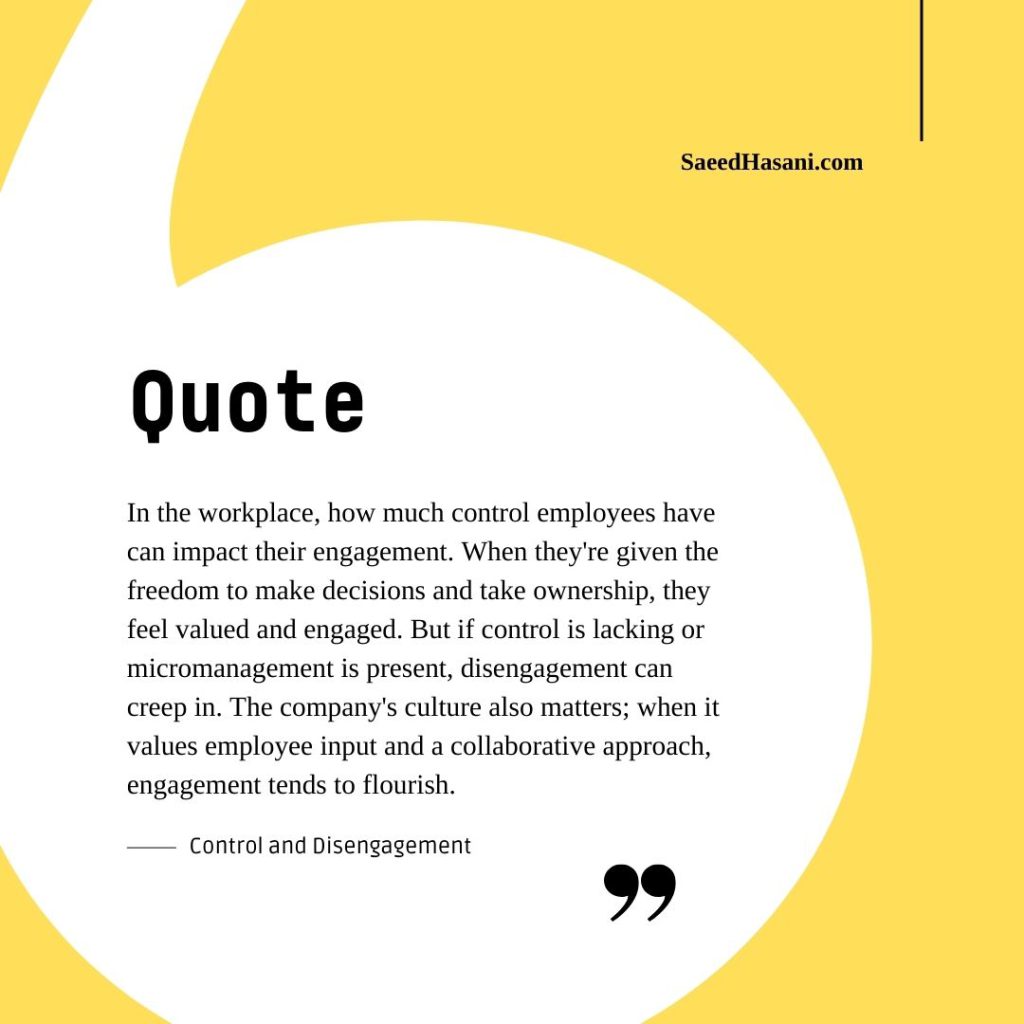
Autonomy and Engagement: Giving employees a certain degree of autonomy and decision-making power can empower them to take ownership of their work. This sense of control can lead to increased engagement, as employees feel their contributions are valued, and they can make a meaningful impact on their tasks and the organization.
Lack of Control and Disengagement: On the flip side, when employees perceive a lack of control over their work processes or decisions, they might feel constrained and disempowered. This can lead to feelings of disengagement, as employees may question the significance of their efforts and the impact of their work.
Micromanagement and Disengagement: Overbearing control or micromanagement can also lead to disengagement. When employees feel that their every action is being scrutinized and they have little room to exercise their judgment, they may become frustrated and disengaged.
Organizational Culture and Perceived Control: The overall organizational culture plays a role in how control and disengagement interact. In cultures that value employee input and participative decision-making, employees are more likely to feel engaged. Conversely, in cultures that are highly hierarchical and top-down, disengagement may arise if employees feel disconnected from decision-making processes.
How do Modern Remote Work Trends Relate to the Concepts of Control and Disengagement?
The rise of remote work highlights the importance of trust and autonomy. Organizations that give employees the freedom to manage their own schedules and tasks are more likely to maintain engagement in remote settings. However, without clear communication and support, remote workers may experience feelings of disengagement due to isolation or lack of direction.
How does Employee Feedback Tie into the Concepts of Control and Engagement?
Employee feedback mechanisms give employees a sense of control over their work environment by providing a platform to voice their opinions. Organizations that actively seek and implement employee feedback tend to have more engaged employees, as they feel their opinions are valued and can influence positive changes.
Are there Cultural Differences in How Control and Engagement are Perceived?
Yes, cultural differences can influence how control and engagement are perceived. Cultures that emphasize individual autonomy and empowerment might respond positively to initiatives that provide more control. In contrast, cultures that value collective decision-making might require a different approach to enhance engagement.

How Can an Organization Enhance Engagement While Reducing its Level of Control?
Decreasing control while increasing engagement within an organization requires a thoughtful and strategic approach. It involves empowering employees, fostering a sense of ownership, and creating an environment that encourages innovation and collaboration. Here are some steps an organization can take:
1. Empowerment and Autonomy:
- Delegate decision-making authority to employees for tasks that align with their skills and expertise.
- Allow employees to set their own goals and priorities within the broader organizational objectives.
- Provide autonomy in work methods and processes, allowing employees to experiment with different approaches.
2. Open Communication and Transparency:
- Establish open lines of communication to share information about the organization’s goals, challenges, and performance.
- Encourage regular feedback from employees to gather insights and ideas for improvement.
- Be transparent about decision-making processes and the rationale behind them.
3. Skill Development and Learning Opportunities:
- Offer training and development programs that allow employees to expand their skills and pursue areas of interest.
- Create a culture of continuous learning where employees feel supported in enhancing their knowledge and capabilities.
4. Recognition and Rewards:
- Recognize and celebrate achievements and contributions, both big and small.
- Implement a reward system that acknowledges employees who take the initiative and excel in their roles.
5. Flexible Work Arrangements:
- Offer flexible work hours or remote work options to provide employees with greater control over their work-life balance.
- Trust employees to manage their time effectively while meeting performance expectations.
6. Encourage Innovation and Creativity:
- Create platforms for employees to share innovative ideas and solutions.
- Support experimentation and risk-taking, even if some ideas don’t yield immediate success.
7. Collaboration and Teamwork:
- Promote a collaborative culture where employees work together to solve problems and achieve goals.
- Assign cross-functional projects that encourage employees to collaborate across different departments.
8. Leadership Support:
- Train leaders to act as facilitators and coaches rather than strict managers.
- Encourage leaders to provide guidance and resources while allowing employees to take ownership of their work.
9. Clear Purpose and Meaningful Work:
- Communicate the organization’s mission and values to help employees understand the impact of their contributions.
- Align tasks with employees’ strengths and interests to enhance their sense of purpose.
10. Feedback and Continuous Improvement:
- Establish a feedback loop that enables employees to provide input on processes and workflows.
- Act on feedback to make iterative improvements, showing employees that their opinions are valued.
It’s important to note that decreasing control doesn’t mean relinquishing all oversight or abandoning organizational goals. Rather, it involves finding a balance that allows employees to have a say in how they approach their work while still contributing to the organization’s success. Implementing these strategies can lead to a more engaged and motivated workforce.
How Can You Effectively Re-Engage Employees?
Re-engaging employees can be a game-changer for your team’s morale and productivity. Here are some effective strategies to help bring back that enthusiasm and commitment:
1. Open Communication
Start by having honest conversations with your employees. Find out what’s on their minds, what challenges they’re facing, and what might be causing their disengagement. Listening actively and showing empathy can make them feel valued and understood.
2. Recognize and Appreciate
Everyone likes to feel appreciated. Regularly recognizing and celebrating employees’ hard work and achievements can boost their morale. A simple thank you or public acknowledgment can go a long way.
3. Provide Growth Opportunities
Offer opportunities for professional development. Whether it’s through training programs, workshops, or mentoring, helping employees grow their skills and advance their careers can reignite their passion for their work.
4. Set Clear Goals and Expectations
Ensure that employees know what is expected of them and how their work contributes to the company’s goals. Clear, achievable goals can give them a sense of purpose and direction.
5. Improve Work-Life Balance
Encourage a healthy work-life balance. Flexible working hours, remote work options, and promoting time off can help employees recharge and come back to work more engaged.
6. Foster a Positive Work Environment
Create a workplace where employees feel comfortable, supported, and motivated. This includes everything from a pleasant physical workspace to a positive and inclusive company culture.
7. Encourage Team Collaboration
Promote teamwork and collaboration. When employees feel they are part of a supportive and cohesive team, they are more likely to be engaged. Regular team-building activities can help strengthen these bonds.
8. Empower Employees
Give employees more autonomy and control over their work. Trusting them to make decisions and take ownership of projects can boost their confidence and engagement.
9. Offer Meaningful Work
Ensure that employees find their work meaningful and aligned with their values. Sometimes, reassigning tasks or projects that align better with their interests can make a big difference.
10. Regular Feedback and Development
Provide constructive feedback regularly. Instead of waiting for annual reviews, have ongoing discussions about performance and development. This helps employees stay on track and feel continuously supported.
11. Address Workplace Issues Promptly
If there are any issues causing dissatisfaction, such as conflicts with colleagues or management, address them promptly and fairly. Creating an environment of trust and fairness is crucial for re-engagement.
12. Show Leadership and Vision
As a leader, demonstrate enthusiasm and commitment to the company’s vision. When employees see their leaders as passionate and invested, it can be contagious and inspire them to follow suit.
13. Personalize Your Approach
Remember that each employee is different. Personalize your approach to re-engagement by understanding individual needs and motivations. What works for one person might not work for another.
By implementing these strategies, you can create a more engaging and motivating work environment. Remember, re-engagement is an ongoing process, and staying attuned to your employees’ needs and feedback is key to maintaining a happy and productive team.
Conclusion
In the realm of organizational dynamics, the interplay between control and disengagement emerges as a pivotal force shaping employee experiences and outcomes. Our journey into this intricate relationship has illuminated the impact of organizational structures, management philosophies, and individual empowerment on engagement levels.
By understanding the subtle connections between these concepts, we’ve armed ourselves with insights to create a motivated, empowered, and committed workforce. We’ve explored how autonomy drives engagement, the absence of control fuels disengagement, and the equilibrium of power shapes perceptions of significance.
Modern trends like remote work have reshaped this equilibrium, emphasizing trust and autonomy. Yet, without clear communication and support, remote workers might battle disengagement due to isolation.
Employee feedback, a potent tool, grants control over the work environment and fosters engagement. Cultures also play a role, with differences impacting how control and engagement are perceived.
In crafting a path to heightened engagement and reduced control, we embrace empowerment, ownership, and a supportive culture. This balance empowers employees, nurtures ownership, and fosters innovation and collaboration.
Reducing control doesn’t mean abandoning oversight but rather achieving equilibrium. It’s about creating a culture where employees guide their work methods while contributing to the organizational narrative—a tale of engaged, active participants propelling success.
As we conclude our exploration, let’s embrace autonomy, empowerment, and a well-crafted ethos, for they cultivate an engaged, impassioned, and resolute workforce—the heartbeat of every thriving organization.





Responses