
The Product-Led Sales Model for Explosive Growth + 5 Advantages!


Are you ready to unlock explosive growth with the Product-Led Sales model? Discover how this innovative approach bridges the gap between perceived and actual value, empowering users like never before. Dive into the key factors driving the shift in buying behavior and learn what it truly means to be a product-led company.
Content Overview:
What is Product-Led Sales?
Product-Led Sales (PLS) is an innovative sales strategy that centers the product at the core of the sales process, leveraging user engagement with the product to drive sales and conversions.
This approach integrates elements of both product-led growth (PLG) and traditional sales-led strategies to maximize conversion rates and enhance customer experience.
Perceived Value vs. Actual Value
When discussing perceived value versus actual value, it’s essential to understand the distinction between what customers believe a product is worth and its intrinsic, quantifiable worth.
Perceived value refers to the worth that customers assign to a product based on their beliefs, emotions, and external factors like branding and marketing efforts.
For instance, consumers might view a luxury brand handbag as highly valuable because of its brand reputation, even if the actual cost of production is relatively low. This perception is shaped by marketing strategies, social influences, and personal biases.
Actual value, on the other hand, is the objective, intrinsic worth of a product, typically determined by the cost of production, quality, and utility. For example, the actual value of a car might be based on its manufacturing cost, materials, and engineering quality.
Understanding the Value Gap
Understanding the value gap is essential for businesses, particularly in product-led sales (PLS) strategies, where the product itself drives customer acquisition and retention. The value gap occurs when there’s a disconnect between the value a company believes its product provides and the value customers perceive.
What is the Value Gap? The value gap represents the difference between perceived value and actual value. Perceived value is the worth customers assign to a product based on their beliefs, emotions, and marketing influences.
In contrast, actual value is the objective, intrinsic worth determined by the product’s quality, cost, and utility.
The Ascendancy of the User
The concept of “The Ascendancy of the User” refers to the increasing influence and importance of end users in shaping business strategies, particularly in the digital and technology sectors.
This shift emphasizes the need for businesses to prioritize user experience, feedback, and data to remain competitive and relevant.
What It Means to Be a Product-Led Company?
Being a product-led company means that the product itself is at the core of the business strategy. This approach leverages the product to drive customer acquisition, engagement, and retention, often minimizing the need for heavy marketing or sales interventions.
Focus on Product Experience: Product-led companies prioritize the user experience and aim to create a product that users love and find indispensable. This means investing heavily in user research, continuous product improvements, and features that provide real value to the users.
User-Centric Development: Product-led companies involve users in the development process, constantly iterating based on user feedback. They focus on solving user problems and delivering value through the product itself.
Freemium and Free Trials: Offering free trials or a freemium model allows users to experience the product before making a purchase. This lowers the barrier to entry and helps users understand the product’s value firsthand.
Self-Serve Models: These companies often use a self-serve model where users can start using the product without any sales intervention. This approach is common in companies like Slack, Dropbox, and Zoom, where users can sign up and start using the product immediately.
Data-Driven Decisions: Product-led companies rely on data to make informed decisions. They use product analytics to track user behavior, understand how users interact with the product, and identify areas for improvement.
Leveraging Digital Platforms to Generate Demand
Leveraging digital platforms to generate demand involves utilizing various online tools and strategies to attract and engage potential customers. Here are some key methods to effectively harness digital platforms for demand generation:
- Content Marketing
- Email Marketing
- Programmatic Advertising
- Account-Based Marketing (ABM)
- Interactive Engagement Tools
- Social Media Engagement
Ensuring Seamless Product Access and Quick Time to Value (TTV)
Ensuring seamless product access and quick time to value (TTV) involves a combination of strategies designed to make the user experience as frictionless as possible, thereby allowing users to quickly realize the benefits of your product.
Employing innovative sales techniques enriched with product and usage insights
Utilizing innovative sales techniques enriched with product and usage insights can significantly enhance sales effectiveness.
Key techniques include account-based marketing (ABM) to target high-value customers more accurately, creating customer loyalty programs to drive referrals, and employing customer-centric sales approaches that focus on empathy and understanding customer needs.
Additionally, leveraging data enrichment allows for personalized engagement by understanding prospects’ preferences and pain points, while integrating insights from social listening and customer analytics helps to optimize the sales process and improve customer satisfaction
Fostering cross-functional growth teams with an experimental mindset
Fostering cross-functional growth teams with an experimental mindset involves creating a safe environment where employees can take risks and learn from failures without fear of repercussions. Encouraging continuous learning and iteration helps teams refine their approaches.
Leadership plays a crucial role by leading through example, promoting open communication, and providing resources for experimentation. Establishing clear goals, effective communication channels, and regular feedback sessions further support innovation and collaboration within diverse teams.
Factors Driving the Shift in Buying Behavior
Consumer buying behavior is continuously evolving, influenced by several key factors:
Increased Online Shopping: The shift to online shopping has accelerated, particularly due to the pandemic. Consumers now expect a seamless online experience with easy navigation, secure payment options, and quick delivery times.
This trend is evident across various demographics, with significant increases in online purchases even among older generations.
Value and Convenience: Availability, convenience, and value are top priorities for consumers. Many are switching brands based on product availability and perceived value, especially in essential categories like groceries and household items.
Health and Wellness: There is a growing focus on personal wellness, driving demand for products that promote physical and mental health. This includes organic foods, fitness equipment, and wellness apps. The pandemic has heightened awareness of health and hygiene, further influencing buying decisions.
Sustainability and Ethics: Consumers are increasingly making purchasing decisions based on a brand’s commitment to sustainability and social responsibility.
Brands that integrate ethical practices and sustainability into their core operations are gaining favor, as consumers look to support companies that align with their values.
Social Commerce and Personalization: Social media platforms are becoming significant channels for product discovery and purchase.
Consumers appreciate personalized shopping experiences, with tailored recommendations and easy checkout processes on platforms like Instagram and Facebook. This trend highlights the importance of engaging content and social media presence for brands.
Understanding these factors can help businesses adapt their strategies to meet changing consumer needs, ensuring they remain competitive in a dynamic market environment.
Risks to the Sales-Led GTM Strategy
A sales-led go-to-market (GTM) strategy, while effective in many scenarios, comes with several risks that companies should be aware of:
1. High Customer Acquisition Costs (CAC): One of the most significant drawbacks is the high cost associated with acquiring customers. This strategy requires substantial investment in building and maintaining a robust sales team, which can drive up the overall expenses significantly.
The extended sales cycles typical of high-touch sales models further exacerbate these costs, making it less efficient compared to other models like product-led strategies.
2. Dependence on Sales Team Performance: The success of a sales-led GTM strategy heavily relies on the performance and effectiveness of the sales team.
This means that hiring, training, and retaining top-notch sales professionals is critical. The challenge here is that great salespeople are hard to find and keep, and turnover can disrupt the sales momentum and negatively impact revenue generation.
3. Scalability Issues: Scaling a sales-led approach can be challenging, especially in down markets where budget constraints can lead to cuts in sales resources.
Additionally, as the company grows, the need for more sales representatives increases, which can further strain resources and make the model less scalable compared to automated or product-led approaches.
4. Slow Time-to-Value: Products that require significant customization, guidance, and a long onboarding process may benefit from a sales-led strategy, but this also means a slower time-to-value for customers.
This can lead to customer dissatisfaction if the perceived benefits of the product take too long to materialize.
5. Market Vulnerability: In competitive markets, a sales-led strategy can leave a company vulnerable to competitors who adopt more efficient customer acquisition models.
These competitors can offer similar or even superior products at a lower cost due to their more efficient operations, potentially capturing market share from sales-led companies.
6. Inconsistent Customer Experience: Ensuring a consistent customer journey can be more challenging in a sales-led approach, as the experience largely depends on the individual salesperson.
Variability in sales techniques and interactions can lead to inconsistencies that affect overall customer satisfaction and brand perception.
Understanding these risks can help companies better prepare and potentially mitigate some of the downsides associated with a sales-led GTM strategy.
For instance, integrating product-led principles or adopting a hybrid approach can balance the strengths of different strategies and create a more robust GTM plan.
When to Opt for a Sales-Led GTM Strategy
Opting for a sales-led go-to-market (GTM) strategy can be particularly beneficial in specific scenarios. Here are some key situations where a sales-led approach is advantageous:
High-Value, Complex Products: When your product is relatively expensive and requires significant customization or integration, a sales-led strategy is ideal. These products often need a hands-on approach to explain their value and ensure they meet the specific needs of each client.
For example, enterprise software solutions often fall into this category, where detailed demonstrations and personalized interactions are crucial for closing deals.
Targeting Enterprise Clients: Large organizations often expect a high level of personalization and tailored solutions.
A sales-led strategy allows sales teams to build strong, personalized relationships with key decision-makers, addressing their unique pain points and demonstrating how your product can deliver specific business benefits.
This approach is essential for enterprise-level sales, where building trust and demonstrating value through direct interaction is key to success.
Long Sales Cycles: Products with long sales cycles benefit from a sales-led approach as it allows for a more detailed and consultative sales process.
This strategy ensures that potential customers receive the information and support they need at each stage of the decision-making process, increasing the likelihood of a successful sale.
Need for Detailed Customer Feedback: Sales-led strategies provide direct access to customer feedback, which can be invaluable for product development.
Sales teams can gather detailed insights into customer needs and preferences, which can then be used to refine and improve the product, ensuring it continues to meet market demands.
Competitive Markets Requiring Differentiation: In highly competitive markets, a sales-led approach can help differentiate your product by providing a superior customer experience.
Personalized interactions and the ability to tailor the sales pitch to address specific customer challenges can set your product apart from competitors.
Products Requiring Education and Support: If your product is new to the market or involves a steep learning curve, a sales-led strategy can provide the necessary education and support to potential customers.
This approach ensures that customers fully understand the product’s value and how to use it effectively, which can be critical for adoption and satisfaction.
A sales-led GTM strategy is most effective for high-value, complex products, enterprise clients, long sales cycles, and markets where personalized service and detailed customer feedback are critical to success.
Closing High Lifetime Value (LTV) Customers
Opting for a sales-led GTM strategy is particularly effective when targeting customers with high lifetime value (LTV). These customers, often found in enterprise-level accounts, bring substantial long-term revenue, justifying the higher customer acquisition costs associated with a sales-led approach.
Sales teams can provide personalized service, detailed product demonstrations, and tailored solutions that meet the specific needs of these high-value clients.
By fostering strong relationships and offering continuous support, companies can secure long-term commitments, reduce churn, and maximize the overall revenue from each customer.
Ideal for Hyper-Niche Solutions
A sales-led strategy is also ideal for hyper-niche solutions where the product addresses very specific and complex needs. In these cases, the sales process often involves educating potential customers about the unique benefits and technical specifications of the product.
Sales teams can deeply understand the particular challenges and requirements of niche markets, providing expert guidance and building trust with customers.
This personalized approach helps in closing deals where the product’s value proposition is not immediately obvious to the broader market but highly relevant to a select group of users.
Suitable for New Categories
When launching products in new categories, a sales-led GTM strategy can be highly effective. New categories often require significant market education and customer support, which sales teams are well-equipped to provide.
By engaging directly with potential customers, sales representatives can address misconceptions, answer detailed questions, and demonstrate the product’s capabilities in a way that marketing materials alone cannot.
This hands-on approach is essential in establishing the product’s credibility and gaining early adopters who can provide valuable feedback and testimonials.
Drawbacks of a Sales-Led GTM Strategy
While a sales-led go-to-market (GTM) strategy can be highly effective in certain scenarios, it also comes with several notable drawbacks.
These challenges can impact the overall efficiency and scalability of the approach, making it essential for companies to weigh the pros and cons before committing to this strategy.
Key issues include higher acquisition costs, a leaky customer acquisition model, and potential impediments to excellent product development due to the organizational structure.
Higher Acquisition Costs
A primary drawback of a sales-led GTM strategy is the significantly higher customer acquisition costs (CAC). This model relies heavily on a large, well-trained sales force, which requires substantial investment in recruitment, training, and ongoing support.
Additionally, the personalized, high-touch nature of sales-led interactions often leads to longer sales cycles, further increasing costs.
These expenses can quickly add up, making it challenging for companies to maintain profitability, especially if the customer lifetime value (LTV) does not sufficiently offset these high acquisition costs.
Leaky Customer Acquisition Model
Another issue with a sales-led GTM strategy is its potential for a leaky customer acquisition model. The focus on personal interactions and customized pitches can lead to inconsistencies in messaging and customer experience.
Sales teams may also prioritize high-value leads, neglecting smaller or less immediate opportunities, which can result in missed revenue potential and inefficient use of resources.
Furthermore, the reliance on individual salespeople means that the quality of customer interactions can vary significantly, potentially leading to lost sales if the salesperson’s approach does not resonate with the prospect.
Organizational Structure Impedes Excellent Product Development
In a sales-led organization, the structure often emphasizes sales performance over product innovation. This can lead to a misalignment between the sales and product development teams, where product feedback from sales might not be effectively communicated or prioritized.
The focus on meeting sales targets can overshadow the need for continuous product improvement and innovation, resulting in a product that may not fully meet market needs or keep pace with competitors.
Additionally, the pressure to close deals quickly can lead to promises of features or capabilities that are not yet developed, creating potential customer dissatisfaction and impacting long-term trust.
By understanding these drawbacks, companies can better evaluate whether a sales-led GTM strategy aligns with their goals and resources and consider incorporating elements of other strategies, such as product-led growth, to mitigate these issues.
Is Product-Led Sales the Right Fit for You?
Determining if a Product-Led Sales (PLS) approach is suitable for your organization involves evaluating your product, market, and sales strategy.
PLS leverages the product itself as the main driver for customer acquisition, engagement, and conversion, often integrating elements of both self-serve and traditional sales models.
This approach is particularly effective for products that offer immediate value, where users can quickly experience benefits through trials or freemium models.
Companies considering PLS should have a strong product-market fit and the ability to support a seamless user experience that can drive organic growth and customer retention.
Understanding the Combination of Self-Serve and Sales Acceleration
A key aspect of Product-Led Sales is the integration of self-serve mechanisms with strategic sales interventions. In this hybrid model, users can explore and start using the product on their own, often through a free trial or freemium version.
As users engage and find value, the sales team can step in to accelerate the sales process by addressing specific needs, offering personalized demonstrations, and closing deals.
This combination allows companies to efficiently scale their user base while still providing the personalized touch needed for higher-value conversions.
Exploring the Synergy Between Sales-Led and Product Acceleration
Product-led sales also explore the synergy between traditional sales-led tactics and product-led growth strategies. This approach ensures that the product itself drives initial interest and engagement, creating a pipeline of qualified leads.
The sales team then utilizes these insights to tailor their approach, focusing on leads that have already shown a strong interest and engagement with the product.
This synergy not only improves the efficiency of the sales process but also enhances the overall customer experience by providing relevant and timely interactions based on actual product usage data.
By carefully assessing these factors, companies can determine whether a Product-Led Sales strategy aligns with their goals and capabilities, potentially leading to more efficient growth and higher customer satisfaction.
Advantages of Product-Led Growth
Product-led growth (PLG) is an approach where the product itself is the main driver of customer acquisition, expansion, and retention. By focusing on creating a superior product experience, companies can organically attract and convert users.
This strategy is particularly beneficial for products that offer immediate value and can be easily adopted through self-service models. PLG leverages the product to create a seamless and enjoyable user experience, driving sustainable growth and efficiency.
Dominant Growth Engine
In a Product-Led Growth strategy, the product becomes the dominant growth engine. The emphasis is on developing a product that is so compelling and valuable that it naturally attracts users.
By offering features like free trials, freemium models, and intuitive onboarding processes, the product markets itself. This organic growth reduces reliance on traditional marketing and sales efforts, allowing the product to be the primary tool for driving user acquisition and engagement.
Significantly Lower Customer Acquisition Cost (CAC)
One of the major advantages of PLG is the significantly lower Customer Acquisition Cost (CAC). Since the product itself is the main driver of growth, the need for a large sales team and extensive marketing campaigns is reduced.
Users can discover, try, and adopt the product on their own, often with minimal intervention from sales personnel. This self-service model not only reduces CAC but also scales more efficiently as the product grows.
Faster Sales Cycles
PLG also results in faster sales cycles. When users can experience the product firsthand through trials or freemium versions, they can quickly see its value.
This accelerates the decision-making process, as potential customers are already familiar with the product’s benefits and functionalities by the time they engage with the sales team. Consequently, sales teams can focus on converting highly engaged leads, leading to quicker sales conversions.
Higher Revenue-Per-Employee (RPE)
With a PLG strategy, companies often achieve a higher Revenue-Per-Employee (RPE). By reducing the dependency on large sales and marketing teams, organizations can operate more efficiently.
The product does much of the heavy lifting in attracting and converting users, allowing the company to generate more revenue with fewer resources. This lean approach contributes to higher overall productivity and profitability.
Enhanced User Experience
An enhanced user experience is at the core of Product-Led Growth. The strategy focuses on delivering a product that is easy to use, provides immediate value, and continuously improves based on user feedback.
This user-centric approach not only drives adoption and retention but also fosters customer loyalty and advocacy. Satisfied users are more likely to recommend the product to others, further fueling organic growth and creating a positive feedback loop.
By leveraging these advantages, companies adopting a Product-Led Growth strategy can achieve sustainable and scalable growth, driven by a superior product experience that attracts, retains, and delights users.
Reimagining Product-Led Sales
Reimagining Product-Led Sales (PLS) involves integrating the strengths of both product-led and sales-led approaches to maximize efficiency and customer satisfaction.
This hybrid strategy leverages the product to generate demand and engage users while strategically involving the sales team to close deals, especially for larger contracts or complex solutions.
By combining the self-serve ease of product-led growth with the personalized touch of a traditional sales approach, companies can create a seamless and effective customer journey that drives growth and retention.
Product-Led Sales Go Beyond Merely Converting Self-Serve Users to Paid Customers
Product-Led Sales (PLS) extends beyond simply turning free or trial users into paying customers. It focuses on creating a holistic customer journey where the product’s value is showcased at every stage, encouraging users to explore and engage deeply with the product.
This strategy includes using detailed product analytics to understand user behavior and personalize the sales approach, ensuring that the transition from self-serve to a sales-assisted purchase is smooth and tailored to the user’s needs.
Product-Led Sales Benefits More Teams Than Just the Sales Department
PLS benefits multiple teams across an organization, not just the sales department. For instance, the marketing team can use insights from product usage data to craft more effective campaigns and target the right audience.
The product team gains valuable feedback directly from users, allowing for continuous improvement and innovation.
Customer success teams can leverage this data to provide better support and enhance user satisfaction. By fostering collaboration among these teams, PLS creates a more integrated and efficient workflow that enhances the overall customer experience.
By adopting a Product-Led Sales approach, companies can achieve a balanced, user-centric growth strategy that drives long-term success and customer loyalty.
This method ensures that every interaction with the product is meaningful and that users receive the support they need to fully realize the product’s value.
Key Traits of a Product-Led Sales Approach
A Product-Led Sales (PLS) approach effectively blends the best aspects of product-led growth with traditional sales strategies. This hybrid model leverages the product to attract and engage users, while the sales team steps in at critical points to provide personalized assistance and close deals.
By focusing on user experience and product interaction, PLS ensures a seamless and efficient sales process that enhances customer satisfaction and drives growth.
Identifying the Main Characteristics of a PLS Strategy
- Strong Sales-Assist Motion: In a PLS strategy, sales teams don’t dominate the customer interaction but instead complement the product experience. They engage strategically at critical points, such as when a user needs additional clarification or personalized help, thus enhancing the user experience and making the sales process more consultative and less transactional.
- Clear Rules of Engagement: PLS strategies establish clear guidelines for when and how sales teams should engage with users. This ensures that sales efforts do not overlap or cannibalize the self-serve journey. By delineating responsibilities and workflows, companies can optimize their sales resources and prevent overwhelming users with aggressive sales tactics.
- Emphasis on Product Qualification: In PLS, product usage data plays a crucial role in lead qualification. Instead of relying solely on traditional demographic or firmographic data, sales teams analyze how users interact with the product—such as feature usage, frequency of login, and engagement metrics—to identify product-qualified leads (PQLs). These insights help sales teams focus on users who are most likely to convert, making the sales process more efficient and effective.
- Value-Driven Approach: PLS teams prioritize helping customers solve their problems and derive maximum value from the product rather than pushing hard for sales. This consultative approach increases customer retention and boosts conversion rates for upsells and expansions. By focusing on providing value, PLS strategies build trust and foster long-term customer relationships.
- Enhanced User Experience: By integrating automated and human touchpoints, PLS ensures that users can explore and understand the product at their own pace while knowing that expert help is available when needed. This balance creates a positive user experience, builds trust, and encourages users to advocate for the product, thus driving organic growth and retention.
These characteristics make Product-Led Sales a powerful approach for companies aiming to enhance customer engagement, optimize sales efficiency, and achieve sustainable growth.
Product Usage Data vs. Firmographic Data
Product usage data and firmographic data are both crucial for B2B companies, but they serve different purposes and provide unique insights. Firmographic data focuses on the characteristics of businesses, such as industry type, company size, revenue, and geographic location.
This data helps companies segment their target market, tailor their marketing strategies, and identify high-value prospects. For example, understanding the number of employees or the annual revenue of a potential client can help a business customize its approach and offer relevant solutions.
On the other hand, product usage data provides insights into how customers interact with a product. This includes information on who signed up for the product, which features they use, how frequently they engage with the product, and who the power users are within a company.
Product usage data is vital for understanding customer behavior and identifying signals that indicate a high likelihood of conversion or expansion. It allows sales teams to prioritize leads based on actual usage patterns rather than just firmographic characteristics.
While firmographic data can help in creating a broad strategy for market segmentation and targeting, product usage data is more actionable for sales and customer success teams. It enables them to engage with customers at the right time, based on their interactions with the product.
This combined approach of leveraging both firmographic and product usage data leads to more efficient sales processes and better customer experiences.
Ultimately, the integration of both data types can significantly enhance a company’s ability to not only attract but also retain and expand customer relationships.
By understanding both who the customers are and how they use the product, businesses can develop more targeted, effective, and personalized strategies that drive growth and satisfaction
Mastering the Product-Led Model
The product-led growth (PLG) model represents a transformative approach to business strategy where the product itself is the primary driver of customer acquisition, retention, and expansion.
This model focuses on delivering significant value through the product, allowing users to experience its benefits firsthand, often through free trials or freemium offerings.
By emphasizing user experience, continuous product improvements, and data-driven decision-making, companies can foster loyalty and drive sustainable growth.
Successful PLG companies like Atlassian, Slack, and Dropbox have demonstrated that a well-executed product-led strategy can lead to high user engagement, low customer acquisition costs, and scalable business expansion.
Only a Select Few Have Truly Mastered the Product-Led Approach
While many companies aspire to adopt a product-led approach, only a select few have truly mastered it.
These companies excel by integrating PLG principles across all organizational levels, ensuring that every team—from product development to marketing and sales—is aligned towards enhancing the product experience and driving growth through user satisfaction.
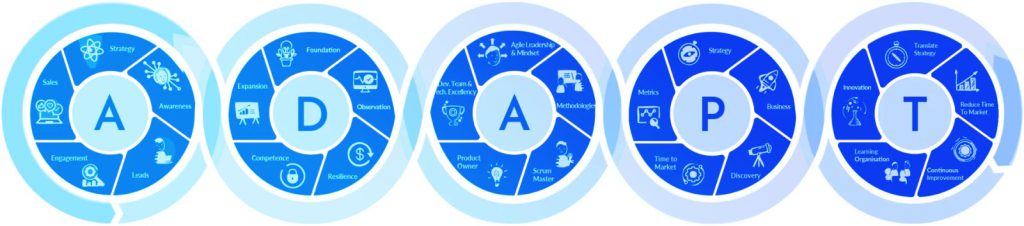
Mastery of PLG requires agility, continuous feedback loops, and the ability to pivot quickly in response to market changes and user feedback (ADAPT Methodology).
Moreover, top-performing product-led companies often combine elements of traditional sales and marketing strategies with their product-led initiatives.
For instance, they might use free trials to attract users and then employ sales teams to convert those users into long-term customers, particularly for enterprise-level solutions.
This hybrid approach allows them to maximize conversion and value at each stage of the customer journey, ensuring sustained growth and competitive advantage.
Mastering the product-led model involves more than just offering a great product; it requires a holistic, agile, and user-centric approach to business, where the product continuously evolves based on real-time feedback and data analytics.
Product-Led vs. Sales-Led: Why PLS Prevails?
The debate between product-led (PLG) and sales-led (SLG) growth models centers around how companies drive customer acquisition, retention, and revenue growth.
The product-led model emphasizes the product itself as the primary tool for attracting and retaining customers, typically through free trials or freemium versions that allow users to experience the product firsthand.
This approach relies heavily on delivering an excellent user experience and leveraging customer feedback for continuous improvement.
In contrast, the sales-led model focuses on human interactions, with sales teams guiding potential customers through personalized demos and negotiations, often necessary for complex or high-touch solutions.
Exploring Why Product-Led Sales is a Superior Strategy
Product-led sales (PLS) integrates the strengths of both PLG and SLG, creating a hybrid approach that leverages the product to generate initial interest while incorporating strategic sales efforts to convert engaged users into paying customers.
PLS excels because it combines the self-service aspect of PLG, which allows users to explore and understand the product independently, with the targeted intervention of sales teams to close larger, more complex deals.
This strategy not only enhances conversion rates but also maximizes customer lifetime value by addressing the specific needs and pain points of users through personalized sales interactions.
Providing a Superior Customer Experience
A key advantage of the product-led approach is the superior customer experience it offers. By allowing users to interact with the product directly, they can quickly understand its value and how it meets their needs.
This hands-on experience is often more convincing than traditional sales pitches and helps build trust and satisfaction.
Furthermore, PLS ensures that any necessary human touchpoints are strategically placed to assist users when needed, reducing friction and enhancing the overall user journey.
This combination of self-service and personalized support helps in creating a seamless and enjoyable experience for customers.
Adopting a Cost-Efficient Model
Product-led sales also offer significant cost efficiencies. By reducing reliance on extensive sales teams and instead leveraging the product itself as a primary tool for customer acquisition, companies can lower their customer acquisition costs (CAC).
The freemium and free trial models associated with PLG serve as effective acquisition strategies, attracting a broad audience at a relatively low cost.
This approach not only reduces the need for expensive marketing campaigns but also allows sales teams to focus on high-value opportunities, thereby improving overall sales efficiency and profitability.
Additionally, the data-driven nature of PLS enables companies to make informed decisions, further optimizing resources and investments.
The hybrid PLS model prevails by combining the best elements of both product-led and sales-led approaches, providing a superior customer experience and adopting a cost-efficient framework that enhances overall business growth and sustainability.
Why Are SaaS Companies Embracing a Product-Led Approach?
SaaS companies are increasingly adopting a product-led growth (PLG) strategy due to their ability to drive sustainable, scalable growth by focusing on the product itself as the primary driver of customer acquisition, retention, and expansion.
1. Enhanced User Experience: One of the main reasons SaaS companies embrace PLG is its emphasis on providing a superior user experience.
By allowing customers to experience the product firsthand through free trials or freemium models, users can understand the value of the product without the need for sales pitches.
This self-service model aligns with modern customer preferences, as many users prefer to explore products independently before committing to a purchase. This approach leads to higher user satisfaction and increased adoption rates.
2. Cost Efficiency: PLG significantly lowers customer acquisition costs (CAC). Traditional sales-led models often involve high expenses related to maintaining a sales team and executing extensive marketing campaigns.
In contrast, a product-led strategy leverages the product itself to attract and convert users, thereby reducing the reliance on costly sales processes. This efficiency is crucial for SaaS companies aiming to scale quickly and sustainably.
3. Accelerated Growth and Shorter Sales Cycles: The product-led approach enables faster customer acquisition and shorter sales cycles. By providing immediate access to the product, potential customers can quickly realize its benefits and make purchasing decisions sooner.
This approach eliminates the lengthy process of scheduling demos and sales calls, streamlining the journey from interest to conversion. As a result, companies can achieve faster growth and more predictable revenue streams.
4. Data-Driven Decisions: PLG relies heavily on data analytics to understand user behavior and optimize the product accordingly. By monitoring how users interact with the product, companies can identify areas for improvement, personalize user experiences, and make informed decisions that enhance product value.
This continuous feedback loop helps in refining the product to better meet customer needs, ultimately driving higher retention and loyalty.
5. Improved Retention Rates: Focusing on the product ensures that it continuously evolves to meet user needs, thereby improving customer retention. When customers find consistent value in a product, they are more likely to continue using it and less likely to switch to competitors.
This retention is further bolstered by the organic growth generated through satisfied customers who advocate for the product within their networks.
Making Product-Led Sales Work
Product-led sales (PLS) integrates the best of product-led growth (PLG) and traditional sales-led growth (SLG) strategies to maximize customer acquisition and retention.
By leveraging the product as the primary tool for engaging and converting customers, PLS enables sales teams to focus on high-value opportunities, thus enhancing efficiency and effectiveness.
This approach aligns all company functions—product development, marketing, and sales—towards a common goal: providing value through the product.
Utilizing Customer Data Platforms Effectively
To make PLS work, leveraging customer data platforms (CDPs) is crucial. CDPs collect and unify customer data from various sources, providing a comprehensive view of customer behavior and interactions with the product.
This data helps in identifying product-qualified leads (PQLs) and tailoring sales strategies accordingly. Effective use of CDPs ensures that sales teams have the insights they need to engage customers at the right time with the right message.
Implementing Product Analytics and Telemetry
Product analytics and telemetry are essential for understanding how users interact with your product. These tools track user behavior, feature usage, and engagement patterns, providing valuable insights that can be used to improve the product and optimize the sales process.
Implementing robust analytics allows companies to identify friction points, understand customer needs, and make data-driven decisions that enhance the overall user experience.
Using PQL/PQA Scoring and Qualification Models
Scoring and qualifying leads based on their interactions with the product (PQLs and PQAs) is a cornerstone of PLS. By defining criteria that indicate a lead’s readiness to buy, such as usage frequency, feature adoption, and engagement levels, companies can prioritize leads that are more likely to convert.
This method ensures that sales efforts are focused on the most promising opportunities, thereby improving conversion rates and sales efficiency.
Providing In-Product Guidance and Engagement
In-product guidance, such as tooltips, tutorials, and in-app messages, helps users discover and understand the value of the product. Engaging users directly within the product accelerates their journey to realizing its benefits, leading to higher adoption and satisfaction rates.
This approach also supports a seamless onboarding experience, which is critical for converting free trial users into paying customers.
Integrating Product, Marketing, and Sales Tech Stacks
Integrating the tech stacks of product, marketing, and sales teams is vital for a cohesive PLS strategy. This integration ensures that all teams have access to the same data and tools, facilitating collaboration and aligning their efforts towards common goals.
Tools like CRM systems, marketing automation platforms, and product analytics should be interconnected to provide a unified view of customer interactions and streamline the sales process.
Starting the Journey Toward a Product-Led Sales Approach
Map out the entire customer journey from initial product interaction to purchase. Focus on creating touchpoints that provide value and facilitate seamless transitions from one stage to the next. This journey should highlight the product’s strengths and make it easy for users to progress towards conversion.
Build New, Product-Led Experiences Incrementally
Start by introducing product-led elements in phases. For example, begin with a free trial or freemium model, then add in-product tutorials and personalized onboarding. Gradually enhance these experiences based on user feedback and engagement data.
Establish an Initial Growth Team with Decision-Making Authority
Form a cross-functional team with representatives from product, marketing, sales, and customer success. This team should have the authority to make decisions and drive the implementation of PLS strategies. Ensure they are aligned on goals and metrics to measure success.
Allocate Sufficient Budget to Facilitate Rapid Learning
Investing in the right tools, technologies, and training is essential for a successful transition to PLS. Allocate budget for experiments and iterations, allowing the team to quickly learn from failures and capitalize on successes. This approach enables rapid adaptation and continuous improvement.
When to Add a Sales Team to a Product-Led Organization
Adding a sales team to a product-led organization can be a strategic move when certain indicators show that the existing product-led growth (PLG) approach might benefit from additional sales support.
Typically, this happens when the product has reached a level of maturity and market fit that generates enough inbound interest and engagement from potential high-value customers.
Signs such as an increase in “sales-y” requests from users, growing complexity in customer needs, and high engagement levels with the product suggest that adding a sales team can help capitalize on these opportunities by converting them into larger, more lucrative deals
High-Touch:
In a high-touch sales model, the sales team engages deeply with potential customers, providing personalized assistance and detailed product demonstrations. This approach is ideal when dealing with enterprise clients or complex products that require significant customization and integration.
High-touch sales are crucial when the product’s value needs to be communicated through detailed discussions, often involving multiple stakeholders and longer decision-making processes. This model helps build strong relationships and trust with clients, facilitating the closing of high-value contracts.
Low-Touch:
A low-touch sales model involves a more streamlined and automated approach to customer interactions, often supplemented by occasional sales interventions.
This model works well for products that are relatively easy to understand and use but still benefit from some level of human support to address specific questions or concerns.
In low-touch sales, the sales team might step in during key moments in the customer journey, such as assisting with onboarding or handling more complex queries that the self-service model can’t address.
This balance allows the organization to efficiently manage resources while still providing a personalized touch when necessary.
No-Touch:
In a no-touch sales model, the entire sales process is automated, with minimal to no human interaction. This approach is suitable for highly intuitive products that users can fully explore and understand on their own. It relies heavily on in-product guidance, automated onboarding, and self-service support.
No-touch sales are most effective for products with a large user base that prefers to discover and utilize the product independently.
The success of this model depends on the product’s ability to deliver immediate and clear value without requiring human intervention. This approach allows companies to scale efficiently by focusing on enhancing the product and user experience without expanding the sales team.
The decision to add a sales team to a product-led organization depends on the complexity of the product, the needs of the customer base, and the stage of the company’s growth.
High-touch models are essential for complex, high-value deals, low-touch models for moderate complexity and engagement, and no-touch models for straightforward, scalable products.
What Does It Mean for a Sales Team to Adopt a Product-Led Approach?
For a sales team, adopting a product-led approach means shifting focus from traditional sales tactics to leveraging the product itself as the main driver of customer acquisition and engagement.
This approach emphasizes the product’s ability to demonstrate its value directly to potential customers through free trials, freemium models, or interactive demos.
Sales teams become facilitators who guide and support customers in their journey, using insights from product usage to tailor their interactions.
This strategy not only helps in reducing friction in the sales process but also ensures that the product’s value is clearly communicated and experienced firsthand by the customers.
Reducing Customer Friction
Reducing customer friction involves simplifying the buying process and making it as seamless as possible.
In a product-led approach, this is achieved by providing easy access to the product through self-service options, such as free trials or freemium models, which allow users to explore and understand the product’s value without heavy sales intervention.
Sales teams focus on removing barriers that might hinder the customer’s journey, such as complex onboarding processes or unclear pricing. By making it easier for customers to experience the product, companies can significantly reduce friction and enhance customer satisfaction
Creating Multiple Customer Pathways
Creating multiple customer pathways means offering various routes for customers to engage with and purchase the product based on their preferences and needs.
In a product-led sales model, this could include self-service options for those who prefer to explore independently, guided demos for customers who need more detailed information, and direct sales interactions for high-value accounts.
By providing diverse pathways, companies can cater to different customer segments, ensuring that each customer can find a way to engage with the product that suits them best. This flexibility helps in capturing a broader audience and increasing overall conversion rates.
Using Product Signals to Identify Customer Needs
Using product signals involves analyzing data on how customers interact with the product to identify their needs and tailor the sales approach accordingly. Product signals can include metrics such as feature usage, time spent on the platform, and user behavior patterns.
By monitoring these signals, sales teams can gain insights into which aspects of the product are most valuable to different users and identify opportunities for upselling or cross-selling.
This data-driven approach allows sales teams to engage with customers more effectively, addressing their specific needs and enhancing the overall customer experience.
Leading With Value
Leading with value means focusing on demonstrating the product’s value from the very beginning of the customer interaction. In a product-led approach, sales teams highlight how the product solves specific problems or enhances the customer’s business.
This involves showing tangible benefits through real-life use cases, success stories, and personalized demos. By leading with value, sales teams can build trust and credibility, making it easier for customers to see the immediate benefits of the product and encouraging them to move forward in the sales process.
By integrating these strategies, sales teams in a product-led organization can enhance their effectiveness, improve customer engagement, and drive higher conversion rates, all while maintaining a customer-centric approach.
Crafting Your Product-Led Sales Strategy
Crafting a product-led sales (PLS) strategy involves leveraging the product as the central element in your sales process, ensuring that potential customers can experience its value directly.
This strategy requires a shift from traditional sales tactics to a model where the product itself is the primary driver of customer engagement and conversion.
A well-crafted PLS strategy aligns all departments—product, marketing, and sales—toward a common goal of enhancing user experience and delivering value through the product.
This approach not only streamlines the sales process but also builds stronger customer relationships by focusing on their needs and usage patterns.
Defining Your Goals
Defining clear, measurable goals is the first step in crafting a successful PLS strategy. These goals should align with your overall business objectives and include metrics such as user acquisition, conversion rates, customer lifetime value, and retention rates.
Setting specific targets helps in tracking progress and making data-driven decisions. For instance, goals might include increasing the number of product-qualified leads (PQLs), reducing customer acquisition costs, or improving user onboarding and activation rates.
Clear goals provide direction for your team and help in prioritizing efforts that directly impact the success of the PLS strategy.
Assembling Your Team
Assembling a cross-functional team is crucial for the successful implementation of a PLS strategy. This team should include members from product management, marketing, sales, customer success, and data analytics.
Each team member should have a clear understanding of their role in driving the PLS strategy forward. Collaboration is key; therefore, regular communication and alignment on goals and metrics are essential.
This team should be empowered to make decisions and iterate on strategies based on feedback and data insights. A well-coordinated team ensures that all aspects of the customer journey are optimized to enhance the product experience.
Developing Your Playbook
Developing a comprehensive playbook is essential for standardizing your PLS processes and ensuring consistency across the organization.
This playbook should include detailed guidelines on identifying and nurturing PQLs, leveraging product usage data, conducting personalized outreach, and managing customer interactions.
It should also outline best practices for in-product engagement, such as using in-app messaging and providing tailored onboarding experiences.
Additionally, the playbook should incorporate feedback loops to continuously improve strategies based on real-time data and customer feedback. By having a well-defined playbook, your team can execute the PLS strategy effectively and consistently.
By defining clear goals, assembling a dedicated team, and developing a robust playbook, companies can successfully implement a product-led sales strategy that leverages the product as the core driver of growth and customer engagement.
This approach not only enhances the customer experience but also improves overall sales efficiency and effectiveness.
Conclusion
In conclusion, embracing the Product-Led Sales model offers a strategic advantage by aligning product value with user expectations and driving sustainable growth.
Are you leveraging the full potential of your product to meet evolving customer needs? Share your thoughts and experiences with us in the comments below!





Responses