
SMB Business SEO; 9 Tips to Maximize Your Small Business SEO!


Imagine your small business appearing at the top of Google whenever customers search for what you offer. With SMB Business SEO, even local shops can compete online, attracting more website visitors and foot traffic without a huge ad budget.
By mastering SEO tactics tailored for small and medium businesses (SMBs), you can boost your visibility, credibility, and sales. Read on to learn how to leverage SEO and watch your business grow!
Content Overview:
What is SMB Business SEO?
Small Business SEO is the practice of optimizing a small business’s online presence – especially its website – to improve visibility on search engines like Google.
In simple terms, it means making your website rank higher in search results for keywords related to your products or services so that local and global customers can easily find you.
This often involves the same core tactics as general SEO (like keyword research, content creation, and link-building), but tailored to the needs and scale of smaller companies. Importantly, small business SEO is not limited to local search.
For example, an e-commerce SMB may focus on nationwide or worldwide keywords, while a local store will emphasize local SEO (appearing in location-based searches such as “near me” queries).
In many cases, small business SEO strategies will include both: optimizing for broad organic rankings and for local visibility via tools like Google Business Profile. The bottom line – small business SEO is about helping your business get found online by the people most likely to become your customers.
Why is SEO for Small Businesses Important?
SEO is critical for small businesses because it offers a cost-effective, long-term marketing strategy to attract customers. Unlike paid ads that stop when your budget runs out, SEO keeps bringing in organic traffic 24/7. In fact, organic search drives over half of most websites’ traffic.
By investing time in SEO, a small business can appear on the coveted first page of Google – which is vital, since very few users venture to page two (only about 0.63% click results on the second page). SEO also builds credibility and trust with consumers.
Surveys show 70–80% of search users ignore paid ads and focus on organic results, indicating people trust the businesses that rank highly in organic listings.
User research indicates that the majority of people prefer clicking on organic results over paid ads, which underscores the importance of SEO for earning clicks and trust.
Moreover, SEO helps level the playing field – allowing a small company to compete with larger rivals by earning high rankings through relevance and quality content rather than through massive advertising spend.
Overall, SEO offers small businesses a high return on investment, bringing in ready-to-buy visitors without the ongoing costs of pay-per-click campaigns. It’s an indispensable part of modern marketing that no small business can afford to overlook.
Benefits of Small Business SEO
Optimizing your website for search engines can deliver a host of benefits for a small or medium business:
- Increased Website Traffic: Higher rankings lead to more clicks. If your site appears on the first page of Google (especially in the top few results), you’ll attract dramatically more visitors – and thus potential customers. In fact, websites on page one capture almost all search traffic (the #1 organic result alone gets ~27–40% of clicks), whereas page two results get less than 1%. More traffic can also translate into increased foot traffic for local businesses, as people discover your location online and visit in person.
- Better Online Visibility & Brand Awareness: SEO improves where your website appears on the search engine results page (SERP). Showing up at or near the top for relevant searches makes your business more visible and familiar to consumers. This top-of-mind awareness means when customers are ready to buy, they’re more likely to recall your brand. Only businesses that invest in SEO will show up ahead of competitors on key searches – giving you a valuable edge in visibility.
- Higher Credibility and Trust: Consumers tend to trust Google’s algorithm. Ranking well organically signals that your business is authoritative and relevant. As mentioned, most users prefer organic results – viewing them as more legitimate than ads. Thus, appearing high in organic search lends your small business credibility. On the flip side, if you lack SEO and don’t show up at all, some customers might not even realize your business exists (62% of people ignore businesses that can’t be found online).
- Cost-Effective Marketing: SEO is relatively inexpensive compared to paid advertising, yet delivers lasting results. While it takes effort and patience upfront, the clicks you earn from SEO are free. Over time, effective SEO can generate a steady stream of customers without the cost-per-click that ads require. Small businesses with limited budgets especially benefit from the high ROI of SEO – which is why 61% of marketers prioritize SEO over PPC for growing their business.
- Improved User Experience: A nice bonus – many SEO best practices (fast loading pages, mobile-friendly design, clear navigation, quality content) also enhance your website’s usability. Google’s ranking factors reward sites that deliver a great user experience, so by making your site SEO-friendly, you’re also making it more user-friendly. This leads to happier visitors, longer time-on-site, and higher conversion rates.
- More Leads & Revenue: Ultimately, all the above benefits culminate in the most important outcome – increased sales. By attracting more targeted traffic and building trust, SEO brings you high-quality leads who are actively searching for your offerings. According to research, organic search accounts for 53% of website traffic and 44% of revenue on average. When your site is optimized, you connect with customers at the exact moment they need your product/service, resulting in higher conversion rates and business growth.
By reaping these benefits, small businesses can achieve sustainable growth through SEO without relying solely on paid ads or costly traditional marketing.
Does SEO Work for Small Businesses?
Absolutely – SEO can be incredibly effective for small businesses, though it works best as a long-term strategy.
Search engines like Google actually want to show relevant small/local businesses for certain searches (e.g. a query for a local service), and they adjust their ranking factors to give users the best answers.
In other words, Google doesn’t always favor big brands – if a search is location-specific or niche, a well-optimized small business site can rank #1 and attract those customers.
Many small companies have grown significantly thanks to SEO, enjoying a steady flow of organic leads without spending a fortune on ads.
That said, it’s important to set the right expectations: SEO is not an overnight solution. It can take several months to see results, especially if you’re starting from scratch or operating in a competitive market.
But the patience pays off – unlike paid ads that stop instantly when you cut the budget, a solid SEO foundation yields ongoing traffic and ROI for years. Think of it like planting seeds that continually bear fruit.
Small business owners who consistently apply SEO best practices (or hire a reputable SEO service) almost always find that it “works” by boosting their visibility, traffic, and sales over time.
Even incremental improvements – say moving from page 3 to page 1 on Google – can have a dramatic impact on customer acquisition.
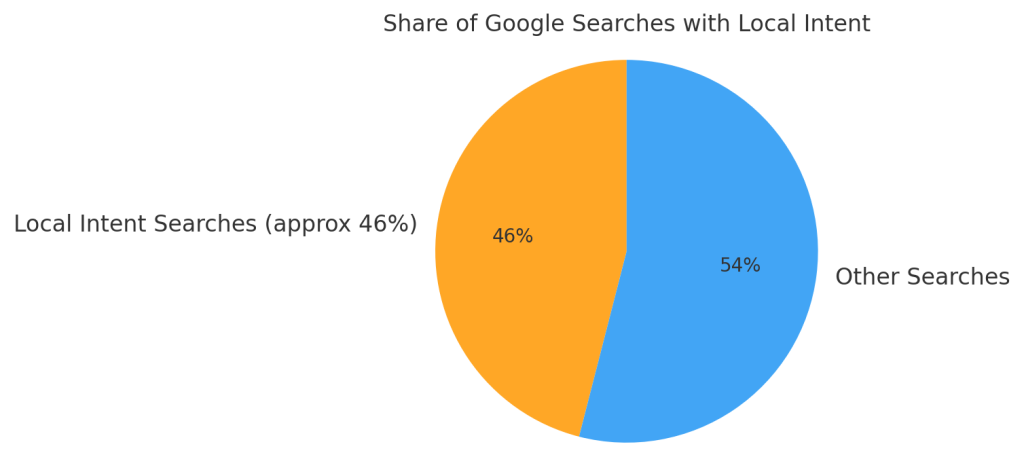
One proof point: according to data, almost half of all Google searches have local intent, meaning users are looking for nearby businesses. Google’s own stats show that 76% of people who search for something local on their phone visit a business within a day, and 28% make a purchase.
This indicates that if you optimize for local SEO, you can capture those ready-to-buy customers. In summary, SEO definitely works for small businesses – it just requires the right strategy and a bit of patience.
Those who invest in SEO often find it becomes one of their highest-ROI channels in the long run.
How Your Small Business Can Rank on Google: Local, Organic, and Paid Results!
When someone searches on Google, there are a few different ways your small business can appear on the results page:
- Local Results (Google Map Pack): For searches with local intent (like “plumber near me”), Google often shows a special map and local business listings (the Local Pack) above the regular results. To rank here, you need to focus on Local SEO – primarily by creating and optimizing a Google Business Profile (formerly Google My Business). Ensure your profile has accurate NAP (Name, Address, Phone), chooses relevant categories, and collects good reviews. Local directory listings (Yelp, etc.) and consistent info across the web also help. Local businesses that optimize their Google listing and earn positive reviews are far more likely to show up in these map results, driving foot traffic and calls. In fact, nearly 46% of Google searches are seeking local information, so appearing in local results can be huge for an SMB.
- Organic Results (Standard Free Listings): These are the familiar blue-link search results. Ranking here is the main goal of traditional SEO. Your business’s website can appear among these organic listings if you optimize your site’s content, structure, and authority for relevant keywords. To rank high organically, make sure your website is well-indexed and follows SEO best practices (quality content targeting your keywords, good on-page optimization, fast load speed, mobile-friendly design, etc.). Building backlinks from other reputable sites will also boost your organic rankings by increasing your site’s authority. High organic placement is valuable – users trust organic results, and as mentioned, the vast majority of clicks go to these rather than ads.
- Paid Results (Google Ads): These are advertisements that appear at the very top (and bottom) of the page, marked with a small “Ad” label. With Google Ads (SEM), a small business can pay to show up for certain keywords almost immediately. This can be useful for quick visibility – for example, running ads for “emergency locksmith [city]” to generate instant leads while your SEO is still ramping up. However, paid ads cost money per click, and many users skip over ads. Still, it’s one way to guarantee placement on page one if you’re willing to invest. An ideal approach is often a blend: use SEO to earn organic and local rankings (free clicks) and supplement with some targeted paid ads for important keywords or when you need an extra boost. Over time, as your SEO strengthens, you may be able to rely less on paid traffic.
To rank on Google you should claim and optimize your Google Business Profile for local visibility, improve your website’s SEO to show up in organic listings, and consider running Google Ads strategically.
This multi-pronged approach ensures your small business captures customers whether they look at the map, the normal results, or even the sponsored spots.
How to Do Small Business SEO?
Implementing SEO for a small business involves several key steps. Here’s a roadmap to get you started:
- Build a Quality Website: If you haven’t already, create a professional, easy-to-use website for your business. Make sure it loads quickly, is mobile-friendly, and clearly showcases what you offer. From an SEO perspective, your site should have the information and answers your target customers might be searching for. A well-structured site (clear navigation, logical pages) helps both users and search engines. Remember, no amount of SEO tricks can help a poor website – so lay a solid foundation here.
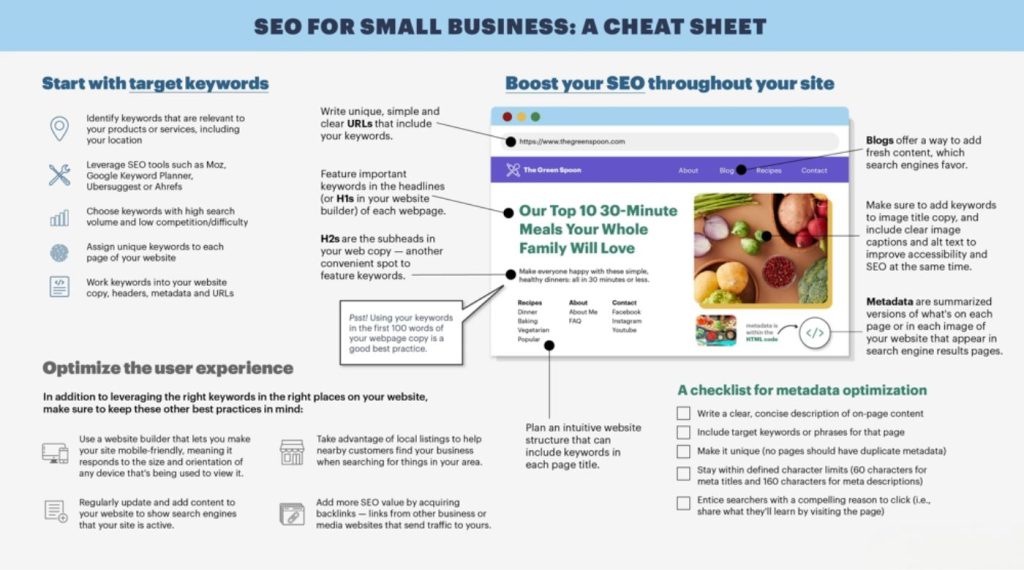
- Perform Keyword Research: Identify the search terms your potential customers are using. Brainstorm a list of keywords related to your products, services, and location. Then use tools (like Google Keyword Planner, Ubersuggest, or Semrush) to expand the list and see search volumes. Focus on a mix of broad keywords (“bakery”) and more specific long-tail keywords (“gluten-free bakery in Denver”). Also consider questions people ask (e.g. “how to fix a leaky faucet” for a plumber) – these can guide your content. Keyword research ensures you optimize your site for terms people actually use, rather than guessing. Each page of your website should target a primary keyword (and related terms) relevant to that page.
- Optimize On-Page Elements: Apply on-page SEO best practices throughout your site. This includes crafting unique, keyword-rich title tags and meta descriptions for each page (to improve click-throughs from Google), using headings (H1, H2s) in your content that include your keywords, and naturally incorporating keywords into your page copy and image alt text. Ensure your URLs are short and descriptive (e.g. yourdomain.com/services/hvac-repair rather than a random string). Internally link between relevant pages on your site – it helps users navigate and spreads SEO value. Essentially, make it crystal clear to search engines what each page is about and that your content is high-quality.
- Set Up Google Analytics and Search Console: These free tools from Google are invaluable for SEO. Google Analytics lets you track your website traffic, user behavior, and which channels (including organic search) are driving visits. Google Search Console helps monitor your site’s search performance – it shows which queries you rank for, your average position, and alerts you to any issues (like crawl errors). Setting these up early will allow you to measure improvement as you optimize your site. They also provide data that can guide your strategy (for example, Search Console might reveal keywords you rank on page 2 for – quick wins if you optimize a bit more).
- Create High-Quality Content: Content is the fuel of SEO. Develop a content plan that might include service pages, product descriptions, FAQs, and blog articles that provide value to your audience. Publish content that answers questions or solves problems your customers have – this can attract both search traffic and backlinks. For instance, a landscaping company could blog about “seasonal lawn care tips” targeting local readers. Make sure all content is original, well-written, and includes your target keywords naturally (avoid keyword stuffing). Fresh content also signals to Google that your site is active. Aim to add new content regularly and update existing pages over time. A steady content schedule (like blogging once a month) can steadily boost your SEO.
- Improve Technical SEO: Ensure there are no technical barriers hindering your site. This involves a few check-ups: Verify that all pages can be indexed (no accidental noindex tags or blocked pages in robots.txt). Check for broken links or images and fix them. Make sure your site uses HTTPS (secure protocol) – Google gives a slight boost to secure sites and users trust them more. Test your site’s mobile-friendliness and page speed, since these are ranking factors – tools like Google’s Mobile-Friendly Test and PageSpeed Insights can help. Compress images and use a caching plugin (if on WordPress) to speed things up. Technical SEO might sound intimidating, but there are many guides and even free audits available. The goal is to create a smooth, crawlable site that offers a great user experience.
- Set Up and Optimize Google Business Profile: If you have a local business, this step is crucial. Go to Google Business Profile (google.com/business) and create or claim your business listing. Fill out all details (address, hours, website, etc.) accurately and choose the correct categories. Add photos of your business/products. Encourage your customers to leave Google reviews (and respond to them professionally) – ratings are a major factor for local SEO rankings and help convert new customers. An optimized Google Business Profile improves your chances of showing up in the Map Pack and Google Maps searches.
- Build Citations and Backlinks: Citations are online mentions of your business (typically name, address, phone) on directories like Yelp, Yellow Pages, TripAdvisor, industry-specific sites, etc. Submitting your info to reputable directories helps reinforce your local presence and can indirectly aid SEO (consistency is key – ensure the NAP info matches your website). Meanwhile, backlinks – links from other websites to yours – are one of the most powerful ranking factors. As a small business, seek opportunities to earn links: perhaps a local news site features your business, you partner with another business and they link to you, or you guest post on a relevant blog. You can also get creative – for example, sponsoring a local event or charity could land you a link on their site. Focus on quality over quantity: a few links from respected, relevant sites beat dozens from spammy sites.
- Track Results and Continuously Improve: SEO isn’t a one-time task – it’s an ongoing process. Use Analytics and Search Console to monitor your traffic and rankings. Which pages are performing well? Which keywords are rising? Also pay attention to conversion metrics – are those new visitors contacting you or buying? Over time, refine your strategy: update content that’s not ranking (maybe expand it or target a less-competitive keyword), double-down on topics that work, and fix any technical issues that pop up (like new broken links). Stay informed about SEO trends – Google’s algorithm evolves, though if you stick to best practices, you’ll generally be on solid ground even after updates. The key is to keep SEO in your marketing routine – when done consistently, the results for a small business can be game-changing.
By following these steps, you’ll cover the core of small business SEO: a strong website, smart keyword targeting, quality content, local optimization, and authoritative backlinks – all tracked and adjusted as needed. It may seem a lot at first, but take it step-by-step.
Many small business owners start by tackling one area at a time or outsourcing pieces to professionals. With time, you’ll build an SEO presence that brings in a steady flow of customers.
9 Tips to Maximize Your Small Business SEO
To boost your SEO results further, here are nine actionable tips for small business owners:
- Claim & Optimize Your Google Business Profile: Don’t miss out on local searches. Verify your business on Google and fill out every section (description, hours, etc.). Choose relevant categories and add photos. Crucially, collect and respond to customer reviews – a high volume of positive reviews can shoot you up local rankings (nearly half of consumers won’t even consider a business with fewer than 4 stars). Google Business Profile is free and can directly drive calls and visits, so make it a top priority if you serve a local area.
- Ensure Your Website Is Mobile-Friendly: More than half of all searches (and most local searches) happen on mobile devices. Google now uses mobile-first indexing, meaning it primarily looks at your site’s mobile version for ranking. A site that isn’t mobile-friendly will struggle to rank. Use responsive design so your site automatically adapts to any screen. Check that buttons and text are easily readable on a phone, and that pages don’t require pinching/zooming. Also, mobile users are often on the go – make key info (contact, address, CTAs) prominent. By catering to mobile users, you’ll please visitors and search engines.
- Perform an SEO Audit (or Get One): It’s good to periodically audit your site for SEO issues. This means checking technical factors (crawl errors, site speed, duplicate content, broken links) as well as on-page elements. You can use free tools like Google Search Console, Lighthouse, or SEO web audit tools to identify problems. For example, Search Console might tell you some pages aren’t indexed or your title tags are duplicated – things you can then fix. Many SEO agencies offer one-time audits for a few hundred dollars; this can be a worthwhile investment to uncover hidden issues and opportunities. Fixing even minor errors (like missing meta tags or compressing heavy images) can noticeably improve your SEO performance.
- Target Long-Tail Keywords: As a small business, you might find it hard to rank for very broad terms (e.g. “shoes”). Instead, focus on more specific long-tail keywords that reflect searchers’ intent. Examples: “women’s running shoes in Phoenix” or “eco-friendly cleaning service Dallas”. Long-tail terms often have lower search volume, but also lower competition – giving you a better shot at ranking. They also tend to attract more qualified traffic (someone searching “eco-friendly cleaning service in Dallas” knows exactly what they want). Use your keyword research to identify these niches and create content/pages targeting them. Over time, capturing lots of long-tail searches can drive substantial traffic.
- Improve Page Speed and User Experience: Fast-loading, easy-to-use websites rank higher and keep customers around longer. Compress images, enable browser caching, and minimize unnecessary scripts to speed up your site. Aim for under 3 seconds load time on mobile. Also evaluate your site’s user experience (UX): Is it clear what to do when a visitor lands? Is your menu intuitive? Good UX reduces bounce rate (people leaving immediately) and increases engagement – signals that help SEO. Google’s algorithm increasingly factors in UX metrics like Core Web Vitals (which measure loading speed, interactivity, and layout stability).
- Write for Humans First, Search Engines Second: This tip, echoed by Google, is vital – always prioritize quality content. Don’t cram keywords unnaturally or produce thin pages just to rank. Instead, focus on providing value to the reader. Answer their questions, offer insightful tips, or solve their problems through your content. Use a natural, conversational tone that fits your brand. Incorporate your keywords in a way that reads smoothly. Engaging, high-quality content keeps visitors on your site longer and encourages them to explore (lowering bounce rate, increasing dwell time – all positive for SEO). Search engines are getting smarter at understanding context, so a page that truly satisfies a user will likely be rewarded in rankings. Great content is the cornerstone of SEO success.
- Earn Backlinks Through Relationships & Content: We mentioned backlinks in the “how to” section – here’s how to actually get them ethically. Start locally: perhaps your town’s Chamber of Commerce has a directory (ensure you’re listed). Build relationships with complementary businesses – e.g. a wedding photographer might trade guest blog posts with a local florist, each linking to the other’s site (relevant and beneficial to both audiences). Publish share-worthy content on your own site: maybe an infographic, a research piece, or a helpful guide. Promote it via social media or outreach; if it’s truly valuable, others might link to it as a resource. You can also issue press releases or pitch local news outlets when you have a notable update – if they write an article and link to your site, that’s a great backlink. Remember, each quality backlink is like a “vote of confidence” in Google’s eyes, so cultivate them continuously.
- Leverage Local SEO Tactics: If you’re a local business, go beyond Google Business Profile. Ensure your NAP info is consistent on all sites – discrepancies can confuse search engines. List your business in prominent local directories and niche platforms (for example, a home contractor should be on HomeAdvisor or Angie’s List). Encourage satisfied customers to leave reviews not just on Google, but also on Facebook, Yelp, TripAdvisor – these build your overall reputation. Create location-specific content: perhaps a landing page for each service area or blog posts about local events (if relevant to your biz). Engage with your community on social media or local forums; sometimes these create buzz that leads to more brand searches or links. The goal is to send clear signals that you are a trusted local expert in your field. That can dramatically improve your visibility in local searches and map results.
- Stay Informed and Adapt: SEO isn’t static. Google makes hundreds of minor algorithm updates yearly (and occasional major ones). While you don’t need to chase every change, it’s wise to keep an ear out for big shifts (following a blog like Search Engine Journal or Google’s Search Central blog can help). For instance, if Google rolls out a major update prioritizing site experience or a new type of search result (like featured snippets or some AI-powered answer box), you may need to adjust your strategy. Also watch your own analytics – sudden drops or spikes can indicate something changed. Adaptability is key. The core advice – providing great content, a great website, and building authority – remains constant. But being informed ensures you can react to industry trends (e.g., the rise of voice search or mobile search growth) and keep your SEO maximized. Consider it professional development for your business – a little time learning each month can pay off in maintaining your hard-earned rankings.
Apply these tips diligently, and you’ll amplify the results of your SEO efforts. Even if you can’t do all nine at once, start with a few and build from there. Every improvement counts, and the cumulative effect can be significant for your SMB’s online success.
How to Choose Small-Business SEO Services
If handling SEO in-house feels overwhelming, you may consider hiring SEO services – like an agency or consultant – to help. Here’s how to choose the right one for your small business:
1. Determine Your Needs and Budget: First, clarify what you want from SEO. Is it higher local rankings? More online sales? A one-time site overhaul, or ongoing help? Also decide how much you can invest. Small business SEO services come in various packages – from basic monthly plans to comprehensive campaigns. Having clear goals and budget will help you find a suitable provider (for example, a freelancer might manage a small local campaign within a few hundred dollars a month, whereas a full-service agency might charge more for aggressive growth targets).
2. Look for Relevant Experience: Not all SEO providers are equal. Research potential agencies or consultants to see if they have experience with businesses of your size and industry. An SEO company that has helped other local service businesses, for instance, will understand your challenges better. Don’t hesitate to ask for case studies or examples of past success. Expertise and a track record are important trust factors – you want someone who has delivered results in situations similar to yours. Also consider specialization: some firms focus on local SEO, others on e-commerce SEO, etc. Choose one whose strengths align with your needs.
3. Evaluate Their SEO Practices: A crucial step – make sure any provider you hire uses ethical, “white-hat” SEO techniques. Unfortunately, some shady operators promise quick fixes (like buying hundreds of links, or using keyword-stuffed doorway pages) that can hurt your site in the long run.
Have a frank conversation about their tactics. Good SEO agencies will be transparent about their process. For example, you might ask: How do you approach link building? Can you outline what on-page changes you’ll make? Be wary if they guarantee a #1 rank (no one can honestly do that), or refuse to share what they actually do. A reliable provider will focus on content quality, on-page optimization, user experience, and legitimate link earning – not gimmicks.
4. Consider Communication and Reporting: Since SEO is ongoing, you’ll want a partner that communicates well. In your initial talks, note how they explain things – do they avoid jargon and make it understandable? That’s a good sign. Also discuss how often you’ll get updates or reports. Most agencies provide monthly reports showing key metrics (traffic, rankings, conversions) and work completed.
Ensure this fits your expectations. You should never be left in the dark about your own SEO campaign. Effective SEO providers act like an extension of your team, keeping you in the loop on progress and next steps. Responsive communication (answering emails, being available for calls) is also important, especially for small business owners who may have a lot of questions.
5. Compare Value (Not Just Price): Finally, when choosing, compare a few options on the value they offer. Don’t automatically go with the cheapest quote – in SEO, you often “get what you pay for”. A very low-cost service might do the bare minimum or use automated, risky techniques. That said, the highest price doesn’t guarantee the best work either.
Look at the scope of services: one agency’s $500/month plan might include content creation and local citation building, whereas another’s $500 plan only does basic monitoring. Evaluate which proposal aligns best with your goals. And check reviews or testimonials of those providers (see what other clients say about their results). Ultimately, choose an SEO service you trust to care about your business. It should be someone who listens to your needs, has a solid plan to improve your SEO, and is committed to helping you grow.
Taking the time to choose the right SEO partner can save you headaches and wasted money. A good agency or consultant will not only deliver better rankings, but also educate you and work with you to achieve your business objectives. SEO is a partnership – pick the partner wisely and it can propel your small business to new heights online.
5 Tips for Choosing an SEO Agency to Manage Your SMB’s SEO
Selecting an SEO agency is a big decision. Here are five quick tips to guide you:
1. Check Their Track Record and Specialties: Look for an agency that has proven success with businesses like yours. Do they have case studies or references in your industry or local area? An agency experienced in SMB SEO will understand small business budgets and challenges. Also note their specialties – if you need local SEO, ensure they highlight that skill (e.g. showing results in improving Google Maps rankings for clients).
2. Ask About Their SEO Strategy (Transparency): A reputable agency should be able to explain in plain language how they’ll improve your SEO. During consultations, ask them to outline their strategy. For example, will they be optimizing existing content, creating new content, focusing on technical fixes, link outreach, etc.? If an agency is secretive or uses a lot of buzzwords without clarity, that’s a red flag. You want transparency. As one guide suggests, ask specific questions like “What will you be working on month-to-month?” and “How do you approach link building?”. The right agency will welcome these questions and give concrete answers.
3. Examine Their Communication and Reporting Process: Communication is key to a good agency-client relationship. Find out how the agency will keep you updated. Will you have regular calls or emails? Will they send monthly reports, and what metrics will be included? Make sure their style suits you – for instance, if you prefer phone updates and they only do emails (or vice versa), it might not be a fit. The agency should also set realistic expectations (e.g. explaining SEO takes time and what initial results might look like). Clear, honest communication and consistent reporting are marks of a professional agency.
4. Read Reviews and Get References: Treat this like hiring an employee – you’d check references, right? Look up the agency’s reviews on Google, Clutch, Facebook, etc. See if clients (especially small business clients) speak positively of their results and service. Don’t be alarmed by one or two bad reviews (no one pleases everyone), but note recurring themes. You can even ask the agency for a couple of client references to talk to. Current or past clients can tell you what it’s like working with the agency day-to-day. This legwork can reveal if the agency is reliable, results-driven, and good with customer service – or if there are any warning signs like poor responsiveness or using outdated tactics.
5. Beware of Unrealistic Promises: Finally, be cautious of agencies that guarantee the moon. SEO has no guarantees – no one can promise “Rank #1 in two weeks” or “1000% traffic increase in a month.” If you hear such claims, be skeptical. Quality agencies will emphasize steady, sustainable improvement and will be upfront about the competitive difficulty of your goals. They’ll likely perform an audit or research in the sales process to set appropriate targets. Choose an agency that offers a clear plan and confidence, but not pie-in-the-sky promises. As one expert notes, unrealistic guarantees are a sign of either inexperience or willingness to use risky methods. Opt for honesty and credibility over hype.
By following these tips, you’ll increase your chances of picking an SEO agency that truly helps your small business thrive. The right agency can become a valuable partner in your growth, while the wrong one can be a costly disappointment – so take your time and choose wisely.
11 SEO Best Practices for Small Businesses
To wrap up, here are eleven essential SEO best practices that every small business should follow:
1. Focus on Quality Content: Content is king in SEO. Create in-depth, useful content that addresses your customers’ needs and questions. Whether it’s product pages or blog posts, make sure each page provides real value. Update your content periodically to keep it fresh and accurate. Using a mix of formats (text, images, maybe video) can engage different users. High-quality content not only ranks better but also builds your authority in the eyes of customers. (Remember E-E-A-T: Expertise, Experience, Authoritativeness, Trustworthiness – if your content demonstrates these, it’s likely to perform well.)
2. Optimize for Mobile First: As noted, Google primarily indexes the mobile version of websites now. Thus, mobile optimization is a must. Ensure your site is responsive to all screen sizes. Test it on your own phone: Is everything readable? Do buttons work well? Mobile pages should load quickly – compress images and minimize heavy scripts because mobile networks can be slower. Also, mobile-friendly means finger-friendly: links or buttons far apart enough to tap easily. If your site isn’t mobile-optimized, that should be a top priority fix for both SEO and user experience.
3. Use Relevant Keywords Naturally: Do your keyword research and then sprinkle those keywords naturally throughout your site. Include the main keyword in the page title, in one or two headings, and a few times in the body text. Use variations and synonyms to avoid repetition. Crucially, write for humans – the keywords should fit the context of your sentences. Also utilize related terms (Latent Semantic Indexing – LSI keywords) that search engines expect to see with your topic. For example, a page about “roof repair” might include terms like “leak”, “shingles”, “flashing”, etc., indicating thorough coverage. Proper keyword usage tells Google what your page is about while still reading well to users.
4. Leverage Local SEO for Local Customers: If you serve a specific geographic area, local SEO is vital. We covered Google Business Profile and citations earlier. Additional best practices: embed a Google Map of your location on your Contact page, and include your city/region in page titles or content where appropriate (e.g. “Serving the Dallas-Fort Worth area” on your homepage). For multi-location businesses, create a unique page for each location with that location’s address and details. Producing some local-focused content (like blog about local events or case studies with local clients) can also send location signals. The idea is to make it extremely clear where you operate so that search engines connect you with searches in those locales.
5. Prioritize User Experience (UX): Google increasingly emphasizes that what’s good for the user is good for SEO. So pay attention to your site’s UX. This means a clean design, easy navigation menu, and logically organized content. Ensure no intrusive pop-ups or ads ruin the experience (Google actually penalizes sites with annoying interstitials).
Check that text is legible (font size, contrast) and that important information is easy to find. Also, implement SSL encryption (HTTPS) on your site – not only for security but Google gives a slight ranking boost to HTTPS sites. A secure, pleasant browsing experience keeps users engaged longer and encourages them to interact – both positive signals for search ranking. Think of UX and SEO as working hand in hand: happy users -> happy search engine.
6. Build Quality Backlinks: Not to sound like a broken record on backlinks, but they remain one of the strongest ranking factors. Aim to earn high-quality backlinks over time. Quality means from reputable, relevant websites (e.g., a link from your industry’s association or a local newspaper is gold). Avoid spammy link schemes. One tip: create shareable resources on your site (like infographics, checklists, or research) that others naturally want to link to.
You can also actively seek backlinks by doing outreach – for instance, if you mention or review a partner product on your blog, let them know; they might link back or share it. Monitor your backlink profile periodically (tools like Ahrefs or Moz can help) to identify new links or remove bad ones (use Google’s disavow tool if ever needed for toxic links). Remember, a few great links beat hundreds of low-value ones.
7. Stay on Top of Algorithm Changes: Keep an eye on major Google updates and SEO news. You don’t have to be an SEO guru, but being aware helps you adapt. For example, in recent years Google rolled out Core Web Vitals as a ranking factor – site owners who followed SEO news had a chance to improve their page speed and stability ahead of that change.
Subscribe to a reputable SEO blog or newsletter. When an update hits (like a core update that affects how content is evaluated), see if your site was impacted (check your analytics for drops/spikes). If yes, read up on what the update targeted and adjust accordingly. Also, stay informed about new search features – e.g., featured snippets, People Also Ask boxes, etc., which offer new opportunities to get visibility. The SEO landscape evolves, and successful small businesses evolve with it.
8. Use Analytics and Conversion Tracking: SEO isn’t just about traffic – it’s about turning that traffic into customers. Make sure you have conversion tracking set up (e.g., goals in Google Analytics for form submissions, or e-commerce tracking for sales). This lets you see which organic landing pages or keywords drive real business results. You might discover that a particular blog post brings lots of visitors but no one converts – maybe you need to add a clearer call-to-action or internal links to your contact page on that post.
Conversely, you might find an article that converts exceptionally well – you could then drive more traffic to it or replicate that style of content. By measuring conversions, you ensure your SEO efforts align with bottom-line goals. It also helps when reporting ROI of SEO (to yourself or higher-ups): you can attribute X revenue or Y leads to organic search, justifying continued investment.
9. Write Unique Title Tags and Meta Descriptions: Every page on your site should have a custom title tag (about 50–60 characters) and meta description (about 150–160 characters). These don’t directly boost rankings, but they influence click-through rate (CTR) from the search results – which can impact rankings. Craft titles that include your primary keyword and also entice the user (e.g., “Affordable HVAC Repair in Phoenix – 24/7 Service | [Brand]”).
For meta descriptions, summarize the page compellingly and include a call-to-action or value proposition if possible. Avoid duplicate metas across pages – each page needs its own to accurately reflect its content. This is a simple best practice, yet many small sites overlook it, hurting their CTR. By optimizing these snippets, you’ll stand out in SERPs and attract more clicks without needing a higher rank.
10. Encourage Customer Reviews and Testimonials: Reviews won’t directly boost your site’s Google ranking (aside from the local pack scenario), but they indirectly help SEO. Strong reviews on Google, Yelp, or industry sites improve your overall online reputation and click-through rates. Imagine a user sees your site in Google along with some star ratings (Google sometimes shows an aggregate star rating if structured data is in place, or they see your Google My Business rating) – a 4.8-star average can entice more clicks than a competitor with 3.5 stars.
Also, having testimonials or reviews on your website (with permission) can add fresh content and keywords (people often mention services or products in their comments). Just be careful to avoid schema markup abuse – use review schema only for genuine reviews on your site.
11. Utilize Schema Markup: Schema markup (structured data) is a technical best practice that can give your listings more visibility. By adding specific schema code to your HTML, you help search engines understand your content better and sometimes trigger rich results. For example, “LocalBusiness” schema can supply details like address and opening hours; FAQ schema on a Q&A page might get you an expanded result in SERPs; Product schema can show price and availability.
Implementing relevant schema tags can make your snippet more informative and prominent, which can boost CTR. It’s not a magic bullet, but as a small business you want every edge. Google has a Structured Data Markup Helper to guide you, or you can use plugins like Rank Math (if on WordPress) to add schema easily. As search results become richer and more interactive, schema is how you speak that language. Use it where appropriate to ensure your business stands out with, say, star ratings, or an image preview, or extra details right on the search page.
Following these 11 best practices will set your small business up for SEO success. It’s a lot of ground to cover, but the good news is you don’t have to get it perfect from day one. SEO is iterative – keep applying these principles, and continuous improvement will yield more and more traffic and leads.
Stick to the fundamentals outlined above (they tend to hold true even as algorithms change), and you’ll build a strong, resilient online presence for your business.
Common SEO Challenges for SMBs
SEO can deliver big benefits, but it’s not without challenges – especially for small and medium businesses with limited resources. Here are some common SEO challenges SMBs face (and tips to overcome them):
- Limited Budget and Resources: Small businesses often can’t throw large budgets at SEO like big companies can. You might not have an in-house SEO expert or money for expensive agencies. As a result, things can progress slowly. How to overcome: Prioritize high-impact, low-cost actions first. Focus on free DIY optimizations: make sure your site is technically sound, do keyword research with free tools, create content yourself (perhaps blogging once a month), and leverage free Google tools. If you do hire help, target specific needs (e.g. a one-time audit or content writing) rather than a full retainer, to maximize ROI. Remember, consistency matters more than a huge budget – even small improvements each week add up.
- High Competition: In many industries, outranking established competitors is tough. Bigger companies or longer-standing websites have the advantage of age, authority, and loads of content. It can be frustrating to see them dominate search results. How to overcome: Identify niche keywords and opportunities they’ve overlooked. Target long-tail and local terms where competition is weaker. Also, differentiate with unique content – perhaps the big guys have generic posts, so you create more in-depth or personable articles. Building local connections (local press coverage, community engagement) can earn you links and recognition that national competitors won’t get. It takes time, but by steadily growing your authority – collecting positive reviews, earning niche backlinks, publishing quality content – you can carve out your own space in the rankings.
- Keeping Up with Algorithm Changes: SEO is a moving target. Google rolls out updates that sometimes change the rules (e.g. a core update might demote “thin” content, or a new focus on page experience). For a busy small business owner, it’s challenging to stay current. How to overcome: Follow a couple of reputable SEO news sources or forums just to catch major updates. But more importantly, focus on foundational best practices (the ones we’ve discussed). Google’s goal with updates is usually to improve search quality – if you concentrate on quality content, good UX, and ethical tactics, you’re less likely to be negatively impacted. If an update does hit your site, don’t panic; analyze what changed (perhaps engagement metrics dropped on some pages) and adjust accordingly. SEO is a long game – adaptability is key.
- Time Constraints and Know-How: Many SMB owners wear multiple hats – SEO might be just one item on a huge to-do list, and it can be confusing if you’re not familiar with it. Finding the time to create content, optimize pages, or learn SEO basics is a real hurdle. How to overcome: Treat SEO efforts as an investment in marketing. Even dedicating a few hours a week can make a difference. You might assign one staff member (or yourself) “SEO time” on Fridays, for instance. Utilize the wealth of free guides and tutorials aimed at beginners – there are step-by-step resources from Google and others that break tasks down. Also, automate what you can: for example, use a plugin to generate an XML sitemap rather than doing it manually, or use tools that send alerts for issues (so you spend time fixing, not finding problems). If budget allows, consider outsourcing some tasks (content writing, for example) to lighten your load while you focus on core business.
- Measuring ROI and Patience: SEO doesn’t give instant gratification, which can be challenging – you might wonder after a couple months, “Is this working? Should I keep doing it?” Unlike a quick ad campaign, SEO’s results are gradual and sometimes hard to directly measure (e.g. how much did that site speed improvement contribute?). How to overcome: Set realistic expectations and interim milestones. Perhaps aim for metrics like “increase organic traffic by 20% in 6 months” or “gain 5 new backlinks this quarter” rather than immediate sales jumps. Use Analytics to watch trends – is organic traffic rising quarter over quarter? Are more visitors coming from target keywords? Celebrate those small victories. Also, combine SEO with other feedback: if new customers mention they “found you on Google,” that’s qualitative proof of success. Educate your team (or boss) that SEO is a marathon, not a sprint, but the payoff (sustainable traffic) is worth the patience. Seeing SEO as an ongoing process helps reframe it from a “challenge” to just another part of running and growing your business.
The common SEO challenges for SMBs revolve around limited resources, heavy competition, a changing environment, and delayed rewards. By acknowledging these and strategically addressing each – budgeting smartly, finding your niches, staying informed (but principled), managing time, and keeping a long-term outlook – you can overcome them. Many small businesses before you have turned SEO from a daunting challenge into one of their greatest assets. You can too!
FAQs about Small Business SEO Services
- What are small business SEO services?
Small business SEO services are professional services aimed at improving a small company’s search engine rankings and online visibility. They can be provided by SEO agencies, consultants, or freelancers who specialize in working with smaller firms.
These services typically include things like: website audits, to identify SEO issues; keyword research, to find the best terms to target; on-page optimization, where they adjust your site’s titles, meta tags, content, and structure for SEO; content creation, such as writing blog posts or service pages with SEO in mind; technical SEO fixes, like improving site speed or mobile usability; local SEO tasks, like setting up your Google Business Profile and building local citations; and off-page SEO, which often means strategizing on link-building and online reputation.
- Why pay for small business SEO services?
Paying for SEO services can be a smart investment for several reasons. First, SEO experts have knowledge and experience that most small business owners don’t.
They keep up with algorithm changes, best practices, and have worked on many sites – so they can likely get results faster and more efficiently than you could on your own. It’s similar to why you’d pay an electrician instead of wiring your building yourself. Second, hiring SEO services saves you time.
As a business owner, your time is money – you may generate more value focusing on your core business while letting an SEO pro handle the website stuff. Third, good SEO services can deliver a strong ROI.
The increase in organic traffic and leads from a successful SEO campaign can far exceed the cost of the service over time. It’s like building equity online – instead of paying for each click (as with ads), you’re investing in improvements that yield traffic for the long run.
Additionally, SEO is becoming more vital; if you don’t do it, competitors might outrank you. By paying for SEO help, you ensure your business stays competitive on Google.
Finally, SEO encompasses a lot of pieces (technical, content, local, etc.) – an agency or professional service can bring a comprehensive approach, covering areas you might miss.
- When should you pay for small business SEO services?
Deciding when to bring in SEO help depends on your situation. Here are some common scenarios where paying for SEO services makes sense: If you’ve launched a new website (or never really optimized your existing site), it’s wise to get an SEO involved early to set things up correctly – they can do initial keyword targeting, on-page tweaks, and technical fixes so you start off on the right foot.
If your website isn’t generating leads or ranking well despite your efforts, it might be time to call an expert who can diagnose issues and create a strategy.
For example, maybe you’ve been blogging and adding keywords but still aren’t on page one – a professional might pinpoint that you need better backlinks or find technical problems holding you back. When you don’t have the time or know-how to do SEO consistently, that’s a strong signal to outsource.
Instead of SEO remaining perpetually on your to-do list, an agency can take that load off. Also, consider hiring out if competition is fierce in your market – a local bakery in a small town may DIY SEO and do fine, but a law firm in a big city likely needs professional SEO to compete.
Finally, many small businesses choose to pay for SEO services when they see growth plateau or when expanding – e.g., you’re opening a second location and want to boost online visibility there, so you bring in SEO pros as part of that growth plan.
Essentially, if SEO is crucial to reaching the next level of your marketing and you can’t (or prefer not to) do it yourself, that’s the right time to invest in SEO services.
- What are the types of SEO services for small business?
SEO services for small businesses can come in various types or packages, often combining multiple tactics. Common types include: SEO Audits – a one-time analysis of your site’s SEO health with recommendations (some SMBs start here to decide next steps).
On-Page SEO Services – focusing on optimizing site content, HTML tags, and structure; for instance, rewriting title tags, improving internal linking, fixing duplicate content, etc.
Technical SEO Services – these zero in on backend issues: improving site speed, mobile optimization, correcting crawl errors, adding schema markup, and so on.
Local SEO Services – aimed at businesses with a physical presence; this might involve setting up Google Business Profile, building local citations, managing reviews, and optimizing for geo-specific keywords.
Content Creation Services – some agencies offer to write blog posts, product descriptions, or other content with SEO best practices baked in, since content is key for ranking.
Link Building Services – a sometimes separate offering, where the provider will work to acquire quality backlinks for your site (through outreach, content marketing, etc.).
Monthly SEO Packages – many small businesses opt for an ongoing package that includes a mix of all the above: each month the service might do content, technical upkeep, link outreach, and report on progress.
There are also specialty services like e-commerce SEO (for online stores, focusing on product schema, Shopify/Magento optimization, etc.) or franchise SEO (for multi-location businesses).
Essentially, types of services range from consultative (audit/strategy) to executive (making changes for you), and from broad (full-service monthly SEO) to narrow (link-building only, or local SEO only).
The right type depends on your business needs and gaps – a good provider will often customize elements from each category to craft a solution for you.
- What do SEO packages for small businesses include?
Typical SEO packages for small businesses are bundles of services designed to cover the bases of SEO at a scale that fits smaller sites.
While they vary by provider, an SEO package might include: an initial audit to evaluate your site and competitors;
keyword research to identify target search terms; on-page optimization of a certain number of pages (for example, optimizing 10 pages’ titles, metas, and content in the first month);
technical fixes, such as improving site speed or setting up 301 redirects for broken links;
content recommendations or creation, like providing blog topic ideas or writing a set number of posts or landing pages;
local SEO setup, including Google My Business optimization and citation building, if relevant;
link building outreach, perhaps committing to acquiring a few quality backlinks per month; and ongoing monitoring and reporting – you’d get monthly reports showing your ranking movements, traffic, and work completed.
Essentially, a package tries to be a turnkey solution: instead of itemizing every task, it promises a combination of strategies to raise your rankings.
For example, a common package might be: “Local Business Bronze Package – 5 keyword optimizations, Google Business Profile management, 2 local content pieces, and 1 press release for $X per month.”
Higher-tier packages would simply scale this up (optimizing more pages, doing more content, more aggressive link building, etc.). The best packages are those that align with your goals – if you care more about content and on-site improvements, ensure the package emphasizes that.
Transparency is key too: you should know what deliverables you’re getting. Reputable SEO packages for SMBs will clearly list what’s included, so you’re not left guessing where your money goes.
- How to choose your small business’s SEO services
Choosing the right SEO service for your small business can feel daunting, but here are some steps to guide you: Evaluate Your Business Goals: Are you trying to get more local customers through the door? Sell more products online? Improve your brand awareness?
Different goals might lean towards different SEO approaches (local SEO vs. content-heavy strategy vs. technical overhaul). Knowing your priorities helps narrow the field. Research Potential Providers: Look for agencies or consultants who have experience with small businesses – perhaps even ones in your industry.
Read reviews, browse their website case studies, and see if their style suits you. Interview and Ask Questions: Don’t be shy about reaching out to a few candidates and having a consultation call.
Ask the questions mentioned earlier (about strategy, communication, etc.) and also ask about their experience with businesses of your size. A good provider will often offer a free initial consultation and maybe even do a cursory audit to show what they can do.
Compare Proposals: If you get proposals, compare not just the price but the scope of work. One might charge a bit more but include significantly more services or a more customized plan. Watch out for any proposal that seems cookie-cutter – effective SEO often requires tailoring to your unique situation.
Consider the Intangibles: Sometimes it comes down to how comfortable you feel. Did the consultant explain things clearly or confuse you with jargon? Do they seem genuinely interested in your business or just making a sale? Trust your gut on who you feel will be a good partner.
Start with a Trial or Short Contract: If you’re uncertain, you could start with a shorter commitment (say a 3-month trial or a smaller project) to gauge how the relationship works.
Many agencies have no long-term lock-in for small business contracts, or at least a break clause, acknowledging that you need to see results and fit. Ultimately, choose the SEO service that gives you confidence through expertise, a solid plan, and a rapport that fits your company’s culture.
The right choice can set you on the path to sustainable online growth, so it’s worth taking a thoughtful approach to this decision.







Responses