
SEO Manager; More Than 10 Incredible Applied Skills and Competencies!


Search engines drive 68% of all website traffic. So, who can get your site to the top? Meet the SEO Manager – the expert behind improved rankings and organic growth.
Whether you’re a business wanting more traffic or someone aspiring to lead SEO strategy, understanding this role can unlock success. Read on to discover what SEO Managers do, the skills they bring, and how to become one.
Content Overview:
Who is an SEO Manager?
An SEO Manager is a specialized digital marketing professional responsible for a company’s search engine optimization (SEO) strategy.
In other words, this is the person who makes sure your website appears prominently on Google, Bing, and other search engines when potential customers look for your products or services.
SEO Managers work to improve a website’s visibility on search engine results pages by incorporating the right keywords, optimizing content, and ensuring the site meets search engines’ criteria.
They typically collaborate with broader marketing teams to align SEO with the company’s content and business goals.
Often coming from a background in marketing or tech, SEO Managers possess an in-depth understanding of how search algorithms rank pages and how to adapt websites to meet those requirements.
In short, an SEO Manager is the go-to person for boosting organic (non-paid) traffic and ensuring a brand is easily found online.
What Does an SEO Manager Do?
SEO Managers wear many hats. Their core mission is to drive organic traffic to a website and improve its search rankings, but achieving this involves a variety of tasks and responsibilities. Here are some of the key things an SEO Manager does day-to-day:
- Develop and Execute SEO Strategy: They design a comprehensive SEO plan aligned with the company’s goals, then put it into action. This includes defining target audiences, selecting the right keywords, and outlining on-page and off-page tactics.
- Perform Keyword Research: SEO Managers research which search terms (keywords) potential customers use, and determine which ones to target. By uncovering high-value, relevant keywords, they can optimize content to match what users are looking for.
- Optimize On-Page Content: They ensure the website’s content is search-friendly. This involves optimizing page titles, headings, meta descriptions, and the content itself to naturally include target keywords and provide value to readers. They might guide content writers on SEO best practices or even write and edit content themselves.
- Handle Technical SEO: An SEO Manager identifies and fixes technical issues that could hurt rankings. This can include improving site speed, ensuring mobile-friendliness, fixing broken links, setting up proper URL structures, and making sure search engines can crawl and index the site effectively. If they have coding knowledge (or work with developers), they might tweak HTML/CSS or structured data to improve site performance in search results.
- Manage Off-Page SEO and Link Building: To build the site’s authority, SEO Managers devise link-building strategies. They may reach out to other websites for backlinks, create shareable content, or manage the company’s presence on external platforms. A healthy backlink profile (quality sites linking to yours) boosts credibility and search rankings.
- Monitor Analytics and Performance: Constant monitoring is a big part of the job. SEO Managers track website traffic, search rankings, click-through rates, and other key metrics using tools like Google Analytics. They analyze this data to see what’s working and what isn’t. For example, if a particular blog post is climbing in rankings, they note why; if organic traffic drops, they investigate the cause. Regular reports are generated to show progress and ROI from SEO efforts.
- Collaborate with Other Teams: SEO doesn’t happen in a silo. These managers work closely with content writers, web developers, designers, and social media or PPC teams to implement SEO best practices across all digital channels. For instance, they might coordinate with developers to deploy a site fix, or with writers to plan blog topics based on keyword gaps. Good communication skills are essential to get everyone on board with SEO recommendations.
- Stay Up-to-Date with Trends: Search engine algorithms change frequently (Google alone updates its algorithm several times a year). An SEO Manager continuously learns and adapts. They follow SEO news, study algorithm updates, and adjust strategies to keep the website compliant and competitive. This proactive approach helps the business stay visible even as ranking factors evolve.
In essence, the SEO Manager is accountable for anything that could impact the site’s search ranking – from the words on a page to the way other sites link to yours, and even how search engine bots crawl your site. It’s a role that combines strategy, analysis, and a bit of creative marketing all at once.
Importance of SEO Managers
Why invest in an SEO Manager? In today’s digital age, being discoverable online can make or break a business. Here are a few points that highlight the importance of SEO Managers:
- Major Source of Traffic: Organic search is often the largest source of website visitors. In fact, search engines drive about 68% of all trackable website traffic. An SEO Manager helps capture this huge share of traffic by making sure your site ranks prominently for relevant searches. Without someone in this role, you might be missing out on the majority of your potential audience.
- Better Visibility = More Customers: The higher your site ranks on search results, the more clicks and visitors it will receive. SEO Managers are crucial because users rarely look beyond the first page of results – 75% of searchers never scroll past page one. If your business isn’t on that first page for important keywords, it’s practically invisible to many consumers. A skilled SEO Manager ensures your brand stays front-and-center, ahead of competitors.
- Cost-Effective Growth: Unlike paid advertising, traffic from SEO is “free” (aside from the cost of the SEO Manager’s work). Over time, a well-optimized site can continuously attract customers without ongoing ad spend. This often leads to a higher return on investment. Moreover, search-driven leads tend to be high quality – they have a 14.6% close rate, which is significantly higher than the conversion rate of traditional outbound marketing leads. An SEO Manager’s efforts directly contribute to this kind of sustainable, high-converting traffic, improving your marketing ROI.
- Adapting to Algorithm Changes: Search engines constantly update how they rank sites. When Google rolls out a core update or a new trend (like voice search or AI-driven results) emerges, an SEO Manager is the one who understands what it means for your business. They’ll adjust your strategy so you don’t lose visibility during these changes. Essentially, they act as guardians of your online presence in a fluctuating digital landscape.
- Competitive Advantage: If you’re not optimizing your site, you can bet your competitors are optimizing theirs. Having an SEO Manager gives you a competitive edge. They can identify what competitors are doing (through competitive analysis) and find opportunities to outrank them. For example, if a rival is weak in content about a certain topic, your SEO Manager might seize that opening to create better content and capture that search traffic. Without this role, you risk falling behind in the online race.
In summary, an SEO Manager is important because they drive more eyes to your website (and by extension, more leads or sales) in a cost-effective way. They help build your brand’s authority and trust online – when your site appears at the top of search results, customers naturally see you as a leader.
For businesses, this means growth; for websites (like blogs or e-commerce stores), it means sustained and increased engagement. In a world where virtually everyone “Googles” before they buy, an SEO Manager ensures you’re the answer they find.
How to Become an SEO Manager
If you’re inspired by this career path and want to become an SEO Manager, there are clear steps you can take. SEO management is not typically an entry-level position – it requires a mix of education, hands-on experience, and up-to-date knowledge. Here’s a step-by-step guide on how to pursue this role:
- Earn a Relevant Degree: While it’s not an absolute requirement, most SEO Manager positions prefer candidates with at least a bachelor’s degree. Common fields of study include marketing, communications, business, or information technology. These programs provide a foundation in understanding consumer behavior, content creation, and basic web technologies – all useful for SEO. (If formal college isn’t an option, don’t worry; success in SEO can also come with experience and certifications, but a degree can make you more competitive.)
- Learn SEO Fundamentals and Tools: Begin building your SEO knowledge through self-study or online courses. Learn how search engines work, what keywords are, and the difference between on-page and off-page SEO. Importantly, get comfortable with SEO tools and analytics software. For example, practice using Google Analytics and Google Search Console on a personal website to track traffic. Explore tools like SEMrush, Ahrefs, or Moz to conduct keyword research or competitor analysis. By experimenting with these tools, you’ll gain practical insights into optimizing websites and measuring results – skills that are crucial for an SEO Manager.
- Obtain SEO Certifications or Training: There are many SEO courses and certifications available online that can bolster your credentials. Taking a structured course ensures you cover all important aspects of SEO (technical, content, link building, etc.) and often provides a certification upon completion. Many of these courses are free or low-cost. For instance, Google offers an SEO fundamentals course, and companies like HubSpot and Semrush have their own certifications. Earning one or two certifications not only builds your knowledge but also shows employers you’re serious and knowledgeable about SEO.
- Gain Hands-On Experience: Experience is often the deciding factor in becoming an SEO Manager. Start applying your skills in a real-world setting as early as possible. You could begin with an entry-level role like SEO Specialist, SEO Analyst, or Digital Marketing Assistant at a company, or even internships that have an SEO or online marketing focus. In these roles, you might optimize blog posts, assist with link building campaigns, or perform keyword research under guidance – all valuable learning experiences. You can also freelance or volunteer to do SEO for a small business or nonprofit, building up a portfolio of results. The key is to demonstrate that you can apply SEO concepts to improve rankings or traffic. Over a couple of years, this groundwork will make you qualified for a manager-level role.
- Cultivate Continuous Learning: The SEO field is always evolving. Algorithms update, new SEO tools come out, and search trends change (for example, the rise of voice search or AI chat answers). A great SEO Manager stays curious and keeps learning even after landing the job. Read industry blogs, follow SEO experts on social media, and attend webinars or conferences if you can. Perhaps most importantly, keep experimenting – the more you test and tinker with SEO strategies on websites, the more insight you gain. This habit of continuous improvement will not only help you become an SEO Manager but also excel as one throughout your career.
By following these steps – education, tool mastery, certification, hands-on work, and ongoing learning – you’ll build a strong foundation for an SEO Manager career.
It’s a journey that combines technical know-how with creative strategy and patience (SEO results don’t happen overnight). But with each successful optimization and each uptick in traffic you achieve, you’ll be one step closer to leading SEO efforts for a company in the future.
What Skills Does an SEO Manager Need?
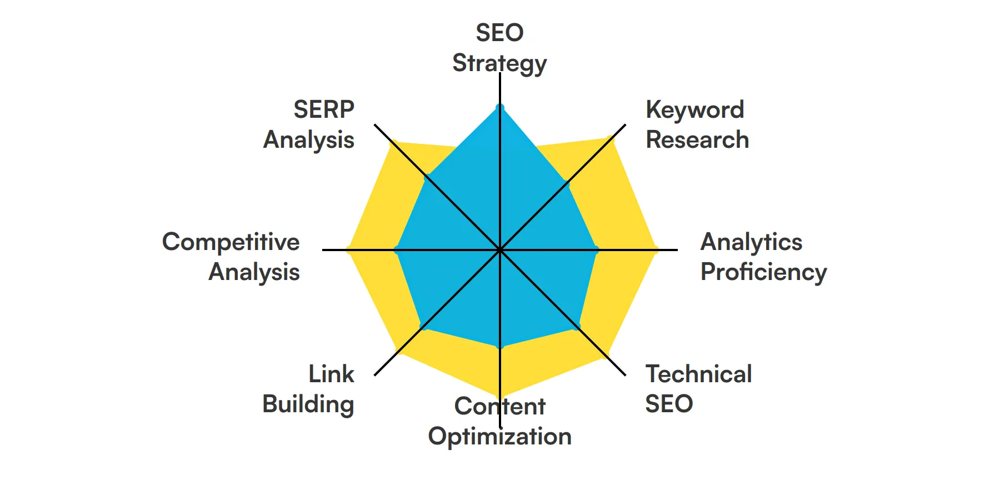
An SEO Manager needs a diverse blend of skills – from analytical and technical abilities to creative thinking and communication. It’s truly a multidisciplinary role.
They must understand how to tweak a website’s code one minute and explain an SEO plan to the CEO the next. Below are some of the most important skills and competencies that successful SEO Managers develop (well over ten, highlighting just how multifaceted this job is):
- SEO Strategy and Planning: The ability to see the big picture and create effective long-term plans. An SEO Manager should be adept at developing comprehensive SEO strategies that align with business goals. This means setting objectives (e.g. increase organic traffic by X%), planning campaigns, and deciding how to allocate efforts across content, technical fixes, and outreach. Strategic thinking also involves prioritizing actions that will have the most impact and adjusting plans based on performance data or industry changes.
- Keyword Research Expertise: At the heart of SEO is understanding what terms people use to search. SEO Managers must be skilled at keyword research – using tools and analysis to find relevant keywords with good search volume and manageable competition. This skill isn’t just about generating a list of keywords, but interpreting user intent behind those searches. For example, knowing the difference between someone searching “buy running shoes” (commercial intent) vs. “best running shoes for marathons” (informational intent) helps in crafting the right content. Good keyword research guides content creation and site structure, ensuring the website speaks the same language as its potential visitors.
- On-Page SEO & Content Optimization: SEO Managers need a strong grasp of on-page optimization techniques. This includes optimizing title tags, meta descriptions, headers, and ensuring keyword usage is natural and effective on each page. They often have a hand in content creation or at least content planning. Being a competent writer or editor is a big plus – they should be able to craft SEO-friendly content or guide writers to do so. This skill set means understanding how to balance writing for search engines (incorporating keywords, using proper formatting) with writing for humans (engaging, high-quality content). An SEO Manager ensures every piece of content on the site, from blog posts to product descriptions, is optimized to rank well and satisfy reader needs.
- Technical SEO Skills: A website’s technical health greatly affects its search performance, so an SEO Manager needs technical acumen. They should understand how websites are built and how to fix or flag issues that might hinder search engines. Key technical skills include knowledge of HTML/CSS (to make or suggest front-end code tweaks), understanding XML sitemaps and robots.txt files, diagnosing indexing problems, and optimizing site speed and mobile responsiveness. They might use crawling tools (like Screaming Frog) to audit the site for broken links, duplicate content, or other errors. While they don’t have to be full-fledged developers, the best SEO Managers can comfortably communicate with development teams and even implement minor technical changes directly when necessary.
- Link Building & Off-Page SEO: Building a strong backlink profile is another crucial competency. SEO Managers should be knowledgeable in off-page SEO strategies – how to earn quality backlinks that boost the site’s authority. This involves outreach skills (contacting other websites for guest posts or partnerships), content marketing (creating link-worthy content like infographics or research), and sometimes PR savvy to promote content. It’s not just about the quantity of links, but quality and relevance. An SEO Manager must also be able to analyze backlinks, disavow harmful links if needed, and stay within ethical “white hat” practices. Effective link building can significantly improve a site’s ranking, so this skill can set apart great SEO Managers.
- Analytics and Data Analysis: SEO is a data-driven field, so being comfortable with numbers and analysis is key. An SEO Manager regularly dives into analytics platforms (Google Analytics, Adobe Analytics, etc.) to track website performance. They should be able to interpret trends in traffic, identify which pages are performing well or underperforming, and attribute changes (like a traffic drop) to potential causes. Proficiency in creating SEO reports is also important – for example, reporting on traffic growth, keyword ranking improvements, or conversion rates from organic traffic. Beyond just reporting, an SEO Manager uses data to make decisions, like which new content to create or what SEO experiment to try next. Strong analytical skills ensure they can demonstrate the value of their work and continually refine tactics for better results.
- Familiarity with SEO Tools: There are many tools in the SEO trade, and an SEO Manager should be adept at using a variety of them. These include keyword research tools (e.g. Google Keyword Planner, SEMrush, Ahrefs), website audit and crawling tools (e.g. Screaming Frog, Moz), rank tracking software, and analytics dashboards. They should also know how to leverage Google Search Console for insights into how Google sees the site. Being tool-savvy means an SEO Manager can work more efficiently and gain deeper insights. For instance, they might use a tool to compare their site with competitors on key metrics or to find content gaps to exploit. As SEO tools evolve, the manager should be quick to learn new platforms that could give the company an edge.
- Critical Thinking & Problem-Solving: Search engine optimization isn’t a checklist you follow the same way every time – every website presents unique challenges. A successful SEO Manager is a creative problem-solver. If a site’s ranking suddenly drops or a well-optimized page isn’t performing as expected, they need to investigate, diagnose, and address the issue. This might involve forming hypotheses (e.g. “Did a Google update affect us? Is there new competitor content outranking us?”) and testing solutions. Critical thinking also comes into play when prioritizing SEO efforts: they must decide which potential optimizations will yield the best results. In the ever-changing digital environment, being able to quickly analyze situations, think critically, and adapt strategies is invaluable.
- Communication and Collaboration: SEO Managers don’t work alone, even if they might spend a good chunk of time in analytics dashboards. They must communicate well with various stakeholders – from marketing directors to content writers and IT staff. Explaining SEO concepts in plain language is often necessary, for example, educating a client or boss on why a certain change is needed. Strong communication skills help an SEO Manager advocate for SEO projects and report results in a persuasive manner. Additionally, they often collaborate on cross-functional projects (like a website redesign or a content marketing campaign), so being a team player is essential. Whether it’s coordinating with the social media team to capitalize on a trending keyword or working with developers to implement schema markup, an SEO Manager’s collaboration skills ensure SEO best practices are integrated throughout the organization’s efforts.
- Project Management and Organization: Running an SEO program involves juggling many tasks and deadlines. SEO Managers benefit from good project management abilities – they often create and manage content calendars, SEO task lists, and schedules for site updates. They might be overseeing a team of SEO specialists or content contributors, which requires delegation and organizational skills. Being organized also means keeping track of changes made to the site (it’s helpful for troubleshooting to know what changed when) and documenting SEO strategies. Time management is critical; for example, managing a site migration’s SEO aspects is a project that requires careful planning and execution. An SEO Manager who can keep projects on track will maintain steady SEO progress without dropping the ball on important details.
- Continuous Learning & Adaptability: Finally, a top-notch SEO Manager has an always-learning mindset. As mentioned earlier, search engines evolve, and so do best practices. Being adaptable means the SEO Manager is quick to incorporate new SEO techniques (like optimizing for voice search or Google’s Core Web Vitals metrics) and to let go of outdated tactics. They stay informed through blogs, forums, and industry updates. More importantly, they’re willing to experiment and learn from failures. Maybe a certain content format didn’t perform as hoped – they pivot and try a different approach. This openness to ongoing learning and flexibility in strategy is what keeps an SEO Manager effective year after year. In a sense, curiosity and adaptability are soft skills that underlie all the hard SEO skills listed above.
These skills and competencies show that an SEO Manager is much more than someone who “knows Google.” They are part analyst, part marketer, part techie, and even part teacher at times. The best SEO Managers continuously refine these skills on the job.
If you’re looking to hire an SEO Manager, you’ll want to find someone who demonstrates many (if not all) of these abilities. And if you’re aiming to become one, developing these skills will be your roadmap to success.
Job Outlook and Salary
The career outlook for SEO Managers is bright and growing. As businesses increasingly recognize the value of organic search traffic, the demand for skilled SEO professionals remains strong.
According to the U.S. Bureau of Labor Statistics, jobs for marketing managers (which include SEO managers) are projected to grow about 10% through 2030, faster than the average for all occupations.
This growth is driven by companies striving to strengthen their online presence and reach more customers via search engines. In other words, investing in SEO expertise is a trend that isn’t slowing down, making the SEO Manager role relatively future-proof in the marketing world.
In terms of salary, SEO Managers are well-compensated, though earnings can vary widely based on experience, location, and the size of the company. In the United States, the average salary for an SEO Manager is around $80,000 per year.
Entry-level SEO roles (like SEO specialists) might start lower, but as one progresses to a manager position, salaries typically move into the higher five figures.
For instance, entry-level SEO Managers might see salaries in the range of ~$50k, whereas those with several years of successful experience, especially at larger companies or in big markets, can earn six-figure salaries (well over $100k).
SEO Managers who demonstrate a track record of significantly increasing a company’s organic traffic or revenue may command a premium, as their skills directly translate into business growth.
Geography also plays a role: major tech hubs or cities (like New York, Los Angeles, or London) often offer higher salaries to account for the cost of living and the competitive market for talent. Additionally, some SEO Managers may work as consultants or freelancers, setting their own rates.
A freelance SEO consultant might charge hourly or per project, and successful ones can potentially earn more than they might in a salaried position, depending on their client base.
Beyond salary, the role often comes with other benefits: the satisfaction of seeing your strategies lead to tangible growth, the challenge of solving new problems (SEO is never boring!), and the ability to work in virtually any industry (since all sorts of companies need SEO).
Some SEO Managers also enjoy flexibility like remote work, since much of the job can be done with a computer and internet connection.
In summary, the job outlook for SEO Managers is positive and the career can be financially rewarding. With steady growth in demand and solid compensation, it’s an attractive path for those interested in digital marketing.
As long as people use search engines to find information, companies will need experts to help them be found – ensuring SEO Managers stay in demand.
Tools and Programs SEO Managers Use
An SEO Manager’s toolbox is filled with software and platforms that help in analyzing and improving website performance. Mastery of these tools and programs enables SEO Managers to do their job efficiently and gain deeper insights.
Here are some of the most common tools and categories of software an SEO Manager relies on:
- Analytics Platforms: Google Analytics is an indispensable tool to track website traffic, user behavior, and conversions. It tells the SEO Manager how many people visit, how they found the site, and what they do once there. For more advanced needs or alternate data sources, some use Adobe Analytics or other analytics suites. These tools help answer the question: “Is our SEO strategy bringing in results?” by providing concrete data on organic traffic and user engagement.
- Search Engine Tools: Google Search Console is crucial for monitoring how a site interacts with Google. It reports any crawling or indexing issues, shows which queries your site is appearing for, and highlights click-through rates for those queries. Bing has a similar tool, Bing Webmaster Tools. Additionally, Google Trends is used to observe search interest over time for specific topics or keywords, which helps in content planning (for example, seeing if a topic is seasonal or growing in popularity). These tools are directly from the search engines themselves, offering valuable data straight from the source.
- SEO Research and Optimization Tools: A number of specialized SEO software platforms help with keyword research, rank tracking, backlink analysis, and competitor analysis. Popular ones include Semrush, Ahrefs, Moz, and KWFinder. Using these, an SEO Manager can discover new keyword opportunities, keep an eye on how the site’s rankings change over time, and even spy on competitors’ SEO strategies (like what keywords they rank for or who’s linking to them). For instance, Semrush or Ahrefs can show all the backlinks pointing to your site and their quality, which is invaluable for off-page SEO work. Many of these tools also provide site audit features to catch SEO issues.
- Crawling and Technical SEO Tools: To maintain a site’s technical health, SEO Managers often use crawling tools such as Screaming Frog or Sitebulb. These programs simulate how a search engine crawls your website and report issues like broken links, missing meta tags, duplicate content, or slow-loading pages. They help in conducting thorough SEO audits. Another example is Google PageSpeed Insights or Lighthouse for analyzing site speed and Core Web Vitals. These tools pinpoint technical improvements that can boost user experience and search rankings.
- Content Optimization and Research Tools: Some tools assist in optimizing content quality and relevance. For example, Surfer SEO and Clearscope analyze top-ranking pages for a keyword and guide writers on how to cover a topic comprehensively (suggesting related terms to include, ideal content length, etc.). While not every SEO Manager uses paid content tools, many use basic ones like Grammarly (to ensure error-free writing) or Hemingway Editor (to improve readability) as part of polishing content for both users and SEO.
- Project Management & Collaboration: Though not SEO-specific, it’s worth noting SEO Managers often use project management tools (like Trello, Asana, or Jira) to organize SEO tasks, especially if working in a team. They might also use collaboration platforms like Google Drive or Slack to coordinate with content and web teams. These help keep track of changes made, content publishing schedules, and communication – indirectly supporting a smooth SEO operation.
In practice, an SEO Manager will choose a suite of tools that best fit their company’s needs and budget. For example, a startup might rely on a combination of Google’s free tools and a single SEO platform like Moz, while a larger enterprise might invest in multiple premium tools for deeper analysis.
The specific tools can change, but the important thing is that an SEO Manager knows how to leverage data and software to make informed decisions.
Being familiar with these programs is crucial – they transform raw data into actionable insights and automate many time-consuming tasks, allowing the SEO Manager to focus on strategy and implementation.
(Fun fact: Many of these tools offer certifications or training modules, so aspiring SEO professionals can learn them in-depth – a nice tie-in to the importance of continuous learning in this field.)
SEO Manager Certificates and Courses
While there’s no requirement to be “certified” to work in SEO, completing certain courses or obtaining certifications can greatly enhance an aspiring SEO Manager’s knowledge and credibility.
Certifications provide structured learning and prove to employers that you’ve mastered specific skills or tools. Here are some notable SEO courses and certifications worth considering:
- Google Digital Garage – Fundamentals of Digital Marketing: This is a free course offered by Google that covers various aspects of digital marketing, including a significant section on SEO. It provides a solid introduction to SEO for beginners and comes with an official certificate from Google upon completion.
- Coursera (UC Davis) – Google SEO Fundamentals: Available on Coursera, this course is part of the Search Engine Optimization Specialization by the University of California, Davis. It dives into the mechanics of how search algorithms work, on-page and off-page optimization, and SEO strategy development. Learners get hands-on assignments, and a certificate is awarded at the end of the specialization.
- Moz Academy – SEO Essentials Certification: Moz, a well-known name in the SEO industry, offers an SEO Essentials course that ends with a certification exam. The course covers fundamental SEO concepts using Moz’s tools for illustration, but the knowledge is applicable universally. Earning a Moz certification is a good way to show you know industry best practices.
- Semrush Academy – SEO Courses and Certifications: Semrush provides a variety of free courses on SEO topics (such as SEO fundamentals, technical SEO, content marketing, etc.), each usually paired with an exam. For example, they have courses like SEO Fundamentals and Technical SEO, which, if you pass the test, grant you Semrush certified badges. These are great for learning specific skills and also demonstrating tool proficiency (which is useful if a job specifically lists experience with Semrush).
- HubSpot Academy – SEO Training Course: HubSpot Academy offers a popular SEO Certification Course (also free). It covers website optimization, link building, keyword strategy, and other core topics, often from a content marketing perspective. The lessons are video-based and easy to follow, and you earn a certification badge upon passing the final exam.
- Udemy and Other Platforms: There are many courses on platforms like Udemy, LinkedIn Learning, and Skillshare related to SEO. For instance, Udemy’s SEO training courses can range from beginner to advanced, taught by various experts. While these might not carry the same “name recognition” as a Google or Moz certificate, they can be valuable for learning and can be listed on your resume. The quality varies, so looking at reviews and instructor reputation is key.
- Advanced and Niche SEO Training: For those who want to go deeper, there are specialized programs such as the Simplilearn SEO Specialist Master’s Program or industry-recognized workshops like Traffic Think Tank. Additionally, some institutions (like universities or professional organizations) offer more formal digital marketing certifications that include SEO modules. These can be more intensive and costly, but might be beneficial for comprehensive learning or networking.
When choosing a course or certification, consider what skills you want to build. If you’re starting out, broad courses (like Google’s or HubSpot’s) are great for covering all bases. If you’re looking to sharpen specific skills (say, technical SEO or local SEO), there might be targeted certifications for those.
Also, ensure any certification you pursue is up-to-date; SEO changes quickly, so a course from several years ago might not include current best practices.
For employers, seeing these certificates on a candidate’s resume can be reassuring, but keep in mind that practical experience often weighs more.
The ideal is to pair real-world experience (e.g., projects or previous jobs where you applied SEO) with some of these certifications to both learn the craft and have proof of your expertise.
Overall, continuous education – via courses or self-study – is part of being a good SEO professional, since the learning truly never stops.
SEO Manager Career Path
The career path of an SEO Manager can vary, but generally, it offers a lot of growth potential and avenues for specialization. Here’s a look at how one might progress in this field and where it can lead:
- Starting Out – Entry-Level Roles: Most SEO Managers don’t begin their careers in management. Common entry-level positions include SEO Assistant, SEO Specialist, or Junior SEO Analyst. In these roles, you focus on executing tasks: researching keywords, updating meta tags, writing content, or doing link outreach, often under guidance from senior team members. Some people enter SEO via related fields too – for example, as a content writer or web developer who gradually picks up SEO skills and transitions into an SEO-focused role. Working in a general digital marketing or content marketing position can also provide exposure to SEO early on. These initial jobs help you build foundational skills and a portfolio of SEO successes.
- Mid-Level – SEO Analyst/Strategist or Coordinator: After gaining some experience (say 2-4 years), you might move up to a more autonomous role like SEO Analyst, SEO Strategist, or SEO Coordinator. Here, you’re not just executing tasks, but also planning and analyzing. You might own sections of the SEO program, such as managing the blog’s SEO or handling all technical SEO improvements. Analysts dive deeper into data to identify opportunities, and strategists start crafting SEO plans for specific goals or campaigns. This phase often involves more direct collaboration with developers or content teams, and you become the go-to person for SEO questions on certain projects. It’s a period of refining expertise and proving you can drive results.
- SEO Manager: With sufficient experience and a track record of success (often around 5+ years into your career, though it varies), you can attain the SEO Manager title. In some organizations, this might be a standalone role; in others, you might lead a small team of SEO specialists or content writers. As an SEO Manager, you’re responsible for the overall SEO strategy and its outcomes. This means setting goals (KPIs like organic traffic growth, improved rankings, etc.), coordinating all the moving parts (content, technical fixes, outreach), and reporting on progress to higher-ups. Leadership and project management become as important as technical knowledge at this stage. Many SEO Managers continue to be hands-on to some extent, but their view is more holistic – they ensure all SEO efforts are aligned and contributing to business objectives.
- Senior SEO Manager / SEO Director: Beyond the manager level, larger companies may offer senior titles like Senior SEO Manager or SEO Director. These roles often involve overseeing multiple SEO managers or larger teams, and shaping the SEO strategy on a broader scale (possibly across multiple websites or international markets). An SEO Director might report to a VP of Marketing and be involved in high-level planning and cross-channel integration (ensuring SEO works hand-in-hand with paid search, social media, etc.). The responsibilities here are more about mentorship, big-picture strategy, and perhaps bigger budgets – you might be deciding whether to invest in a new content initiative or an expensive tool, for example.
- Specialization or Lateral Moves: Some SEO professionals choose to specialize further instead of (or after) moving into pure management. For instance, one could become a Technical SEO Lead (focusing deeply on site architecture and technical fixes) or an SEO Content Strategist (focusing on content and on-page optimization at a high level). Others might transition to roles like SEM (Search Engine Marketing) Manager, adding paid search (PPC) to their skillset, since SEO and SEM are complementary. The skill overlap in digital marketing means an experienced SEO can pivot to roles like Digital Marketing Manager or Content Marketing Manager, broadening their scope beyond SEO while still leveraging that expertise.
- SEO Consultant or Agency Route: With ample experience, some SEO Managers opt to become independent SEO Consultants or start their own SEO agency. As a consultant, you’d work with multiple clients to advise and implement SEO strategies, which offers variety and flexibility. Starting an agency is a more entrepreneurial path – you’d build a team to deliver SEO (and possibly other digital marketing services) to a roster of clients. These paths can be very rewarding; you get to choose projects and potentially scale your own business. However, they also require skills in business development and client management in addition to SEO know-how.
Throughout this career path, one thing is constant: the need to keep learning. Many SEO professionals find that their career growth is closely tied to staying current with industry changes and continuously expanding their skills.
Networking with other SEO professionals (through conferences or online communities) can also open doors to new opportunities and collaborations.
Lastly, it’s worth noting that SEO skills are in demand across all industries. So, as an SEO Manager (or as you move up), you have the flexibility to work in tech, retail, media, finance, etc., or even in an agency serving diverse clients.
This flexibility means you can align your career with industries you’re passionate about, making the work even more fulfilling.
In summary, the SEO Manager career path can lead to higher managerial roles, specialized expert positions, or entrepreneurial ventures. It’s a field with a relatively clear ladder upwards but also lots of branches where you can find your niche.
Whether you aspire to be a Chief Marketing Officer one day with a strong SEO foundation, or run your own successful SEO consulting firm, the experience you gain as an SEO Manager will be a critical stepping stone.
Conclusion
An SEO Manager is so much more than someone who tweaks websites for search engines – they are strategists, analysts, and key contributors to a business’s online success.
We’ve seen that this role requires wearing many hats: one day you’re deep in data, the next you’re brainstorming creative content ideas, and often you’re coordinating across teams to bring it all together.
This blend of technical and creative work, under a strategic umbrella, is what makes the SEO Manager position both challenging and exciting.
For businesses, a capable SEO Manager can be a game-changer. They drive more organic traffic (which means more leads or sales), save on advertising costs by capitalizing on “free” search engine clicks, and keep the company adaptable to the ever-evolving digital landscape.
Hiring a skilled SEO Manager is an investment in steady, long-term growth and brand visibility. It’s akin to hiring a dedicated navigator for the turbulent seas of Google – someone to ensure you not only stay afloat but surge ahead of the competition.
For aspiring professionals, becoming an SEO Manager offers a rewarding career path. It’s a field where you can tangibly see the results of your work (there’s nothing quite like watching your site climb to that #1 spot after weeks of effort!).
The continuous learning aspect means you’re always growing, and the versatility of the role means boredom is rarely an issue. Plus, as the digital world expands, your skills will only become more valuable.
Whether you love diving into analytics, geeking out over algorithms, or crafting content strategy, the role has a bit of everything.
In closing, an SEO Manager truly embodies more than 10 applied skills and competencies – they bring a whole toolkit to the table. If you’re looking to hire an SEO Manager, use this knowledge to find someone who has that balanced skill set and passion for the craft.
And if you’re looking to become one, focus on developing the blend of skills we discussed, stay curious, and keep experimenting. With the right expertise and mindset, an SEO Manager can lead any website to search engine success.
As search trends come and go, one thing remains constant: the need for that savvy individual who can connect businesses with people searching for exactly what they offer. That is the value of an SEO Manager, and it’s why this role is here to stay.







Responses